

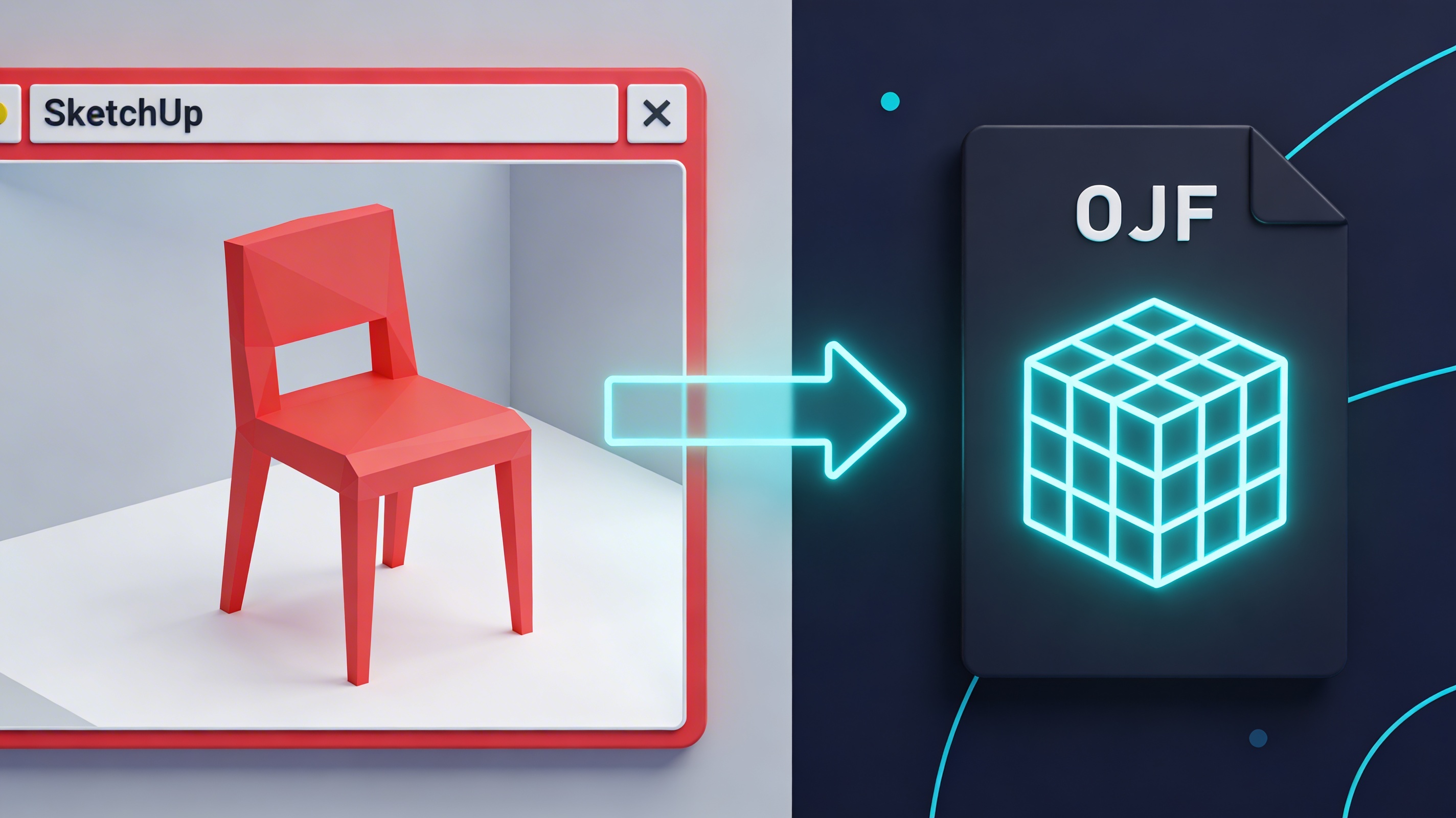
How to Import OBJ into SketchUp: Quick Guide
So, you have a great OBJ model that you want to use in SketchUp, but you're not sure how to get it in there. You're not alone. Many 3D artists and designers face this challenge. While SketchUp is a powerful and user-friendly tool, it doesn't natively support the OBJ format. But don't worry, this guide will show you exactly how to import OBJ into SketchUp using a couple of simple methods. We'll cover everything from using plugins to online converters, so you can get your models into SketchUp and continue with your creative work.
Why Import OBJ Files into SketchUp?
The OBJ file format is a popular choice for 3D models, and for good reason. It's a versatile format that can be opened by a wide range of 3D software, making it great for sharing and collaboration. OBJ files can also store information about materials and textures, which helps to preserve the appearance of your model when you move it between different programs. So, if you've downloaded a model from a 3D marketplace or are working with someone who uses a different 3D application, there's a good chance you'll need to know how to import OBJ into SketchUp.
One of the main reasons for the OBJ format's popularity is its open nature, which has led to its widespread adoption across the 3D industry. You'll find that most 3D modeling, animation, and rendering software can either import or export OBJ files, making it an ideal format for transferring models between different applications without losing important data.
Another advantage of the OBJ format is its simplicity. The file structure is relatively easy to understand, which has made it a popular choice for developers who are creating 3D tools and applications. This simplicity also means that OBJ files are often smaller in size compared to other 3D formats, which can be a big advantage when you're working with large and complex models.
How to Import OBJ into SketchUp: Method 1: Using a Plugin to Import OBJ into SketchUp
The most common and often easiest way to import OBJ files into SketchUp is by using a plugin. There are several plugins available that add OBJ import functionality to SketchUp. These plugins are typically easy to install and use, and they can save you a lot of time and effort.
Import OBJ into SketchUp ??SimLab OBJ Importer
One of the most popular plugins for this purpose is the SimLab OBJ Importer. This plugin provides a straightforward way to import your OBJ files, and it also offers some useful features like the ability to control the import settings. To use the SimLab OBJ Importer, you'll first need to download and install it from the SimLab Soft website. The installation process is simple. After installing the plugin and restarting SketchUp, you'll find a new "SimLab" tab. From there, you can select "OBJ Importer", choose your file, adjust settings like materials and scale, and then import your model. This is a very direct method for how to import OBJ into SketchUp.
Other Plugin Options
Besides SimLab OBJ Importer, there are other plugins you can explore. FluidImporter is another option that supports a variety of file formats, including OBJ. It's a paid plugin, but it offers a lot of advanced features, such as the ability to import large models and to control the import settings in great detail. QuadFace Tools also includes an OBJ importer, which can be helpful if you're working with quad-based meshes. This plugin is particularly useful for users who are working with models that have been created in other 3D applications that use a quad-based workflow. The best plugin for you will depend on your specific needs and budget, as some are free while others are paid.
Method 2: Online Converters
If you'd rather not install a plugin, another option is to use an online converter. These web-based tools can convert your OBJ file to a format that SketchUp supports natively, such as SKP, DAE, or 3DS. To use an online converter, you simply upload your OBJ file, choose the output format, and then download the converted file. This can be a quick and easy solution, especially if you only need to convert a single file. For a reliable conversion, you can use an OBJ file converter. If you need to work with various formats, a general 3D format converter is a great choice.
Online converters have advantages like not needing to install software and being easy to use. However, they also have disadvantages like requiring an internet connection, potential security concerns from uploading files to a third-party server, and sometimes inconsistent conversion quality.
My First-Hand Experience with Importing an OBJ into SketchUp
I recently had to import an OBJ model of a custom piece of furniture for a client's interior design project. The model was of a complex, organically shaped chair that the client had found on a 3D model marketplace. I started by trying to find a direct import option in SketchUp, but I quickly realized that it wasn't available. My first thought was to look for a plugin, and I came across the SimLab OBJ Importer. The installation was simple, and I was able to import the file without much trouble. However, I did run into a small issue with the textures. The chair was supposed to have a wood grain texture, but it was showing up as a solid color in SketchUp. After a bit of research, I found that I needed to adjust the material settings within SketchUp to get everything to look right. I had to manually re-link the texture file to the material, and then adjust the mapping settings to get the wood grain to flow correctly across the surface of the chair. This experience taught me that while plugins are a great solution for how to import OBJ into SketchUp, you may still need to do some minor adjustments to get your model looking perfect. It also highlighted the importance of checking your model in a 3D file viewer before and after importing to ensure everything is as expected.
Tips for a Smooth Import Process
Here are a few tips to help you avoid common issues when importing OBJ files into SketchUp:
- Check your file size: Large OBJ files can sometimes cause SketchUp to slow down or even crash. As a general rule, try to keep your OBJ files under 100MB. If you're having trouble importing a large file, try to simplify the model in another 3D program before importing it. You can use a tool like OmniCraft to decimate the model and reduce the number of polygons.
- Check your model's scale: Make sure your model is at the correct scale before you import it. If the model is too large or too small, it can be difficult to work with in SketchUp. You can use a 3D file viewer to check the dimensions of your model before you import it.
- Check for material and texture issues: As I mentioned in my personal experience, you may need to adjust the material settings in SketchUp after importing your model. Be sure to check that all of your textures are displaying correctly. If you're having trouble with your textures, make sure that the texture files are in the same folder as the OBJ file.
- Consider creating your own models: If you can't find the right model or are having trouble with an existing one, you can always create your own. With tools like an AI 3D model generator, you can create custom models from text prompts. You can even turn a simple picture into a 3D model with an image to 3D tool.
Troubleshooting Common Issues with an OBJ Import: A Guide on How to Import OBJ into SketchUp
Even with the best preparation, you may still run into some issues when you import OBJ into SketchUp. Here are some of the most common problems you might face when you import OBJ into SketchUp and how to fix them:
- Missing textures: This is one of the most common problems that users encounter. If your textures are missing, the first thing you should do is check to make sure that the texture files are in the same folder as the OBJ file. If they are, then you may need to re-link the textures in SketchUp's material editor.
- Incorrect scaling: If your model is too large or too small, you can use SketchUp's scale tool to resize it. To do this, select the model, and then activate the scale tool. You can then drag the handles to resize the model.
- Flipped normals: If some of the faces on your model appear to be inside out, then you may have a problem with flipped normals. To fix this, you can use a plugin like Solid Inspector? to automatically fix the normals.
FAQ Section
Can I import OBJ files into the free version of SketchUp?
Yes, you can import OBJ files into the free version of SketchUp, but you will need to use a plugin or an online converter. The free version of SketchUp does not have a native OBJ import feature.
What are the best plugins for importing OBJ files into SketchUp?
The best plugin for you will depend on your specific needs. Some of the most popular options include the SimLab OBJ Importer, FluidImporter, and QuadFace Tools. It's a good idea to try out a few different plugins to see which one you like best.
How do I fix texture issues when importing an OBJ file?
If you're having texture issues, the first thing you should do is check the material settings in SketchUp. You may need to re-link the texture files or adjust the mapping settings. If you're still having trouble, you can try using a different plugin or online converter.
Can I import animated OBJ files into SketchUp?
No, SketchUp does not support animated OBJ files. If you need to work with animated models, you'll need to use a different file format, such as FBX.
What other 3D file formats can I import into SketchUp?
SketchUp Pro supports a variety of 3D file formats, including 3DS, DAE, DEM, DDF, IFC, and KMZ. The free version of SketchUp has more limited import options.
Is it better to use a plugin or an online converter?
Both plugins and online converters have their pros and cons. Plugins are generally more powerful and offer more features, but they can also be more expensive. Online converters are often free and easy to use, but they may not be as reliable. The best option for you when you want to import OBJ into SketchUp will depend on your specific needs and budget.
Conclusion
Knowing how to import OBJ into SketchUp is a valuable skill for any 3D artist or designer. While SketchUp doesn't support the OBJ format out of the box, there are several easy ways to get your models into the program. Whether you choose to use a plugin or an online converter, you'll be able to import your OBJ files and continue with your creative work. So, don't let file formats hold you back. With the right tools and a little bit of knowledge, you can work with any 3D model in SketchUp.