What Is CGI? Computer Generated Imagery Explained
Computer-Generated Imagery, or CGI, is a term you??e likely heard, especially if you??e a fan of blockbuster movies or video games. But what is the actual CGI meaning? It?? the art of creating and manipulating images with computer software, a digital craft that has reshaped entertainment and design. While many associate CGI with explosive special effects, its applications are far more diverse, ranging from subtle visual enhancements in historical dramas to the creation of entire virtual worlds. In the ever-evolving landscape of 3D content, platforms like Hyper3D are making it easier for creators to dive in, offering tools like an AI 3D CGI generator that streamline the creation process.
The Core Concepts of CGI: Unpacking the CGI Meaning
To truly grasp the CGI meaning, it helps to understand its fundamental principles and the process behind it. Understanding the true CGI meaning is to understand a blend of artistry and technology, a digital dance of polygons and pixels.
What Does CGI Stand For?
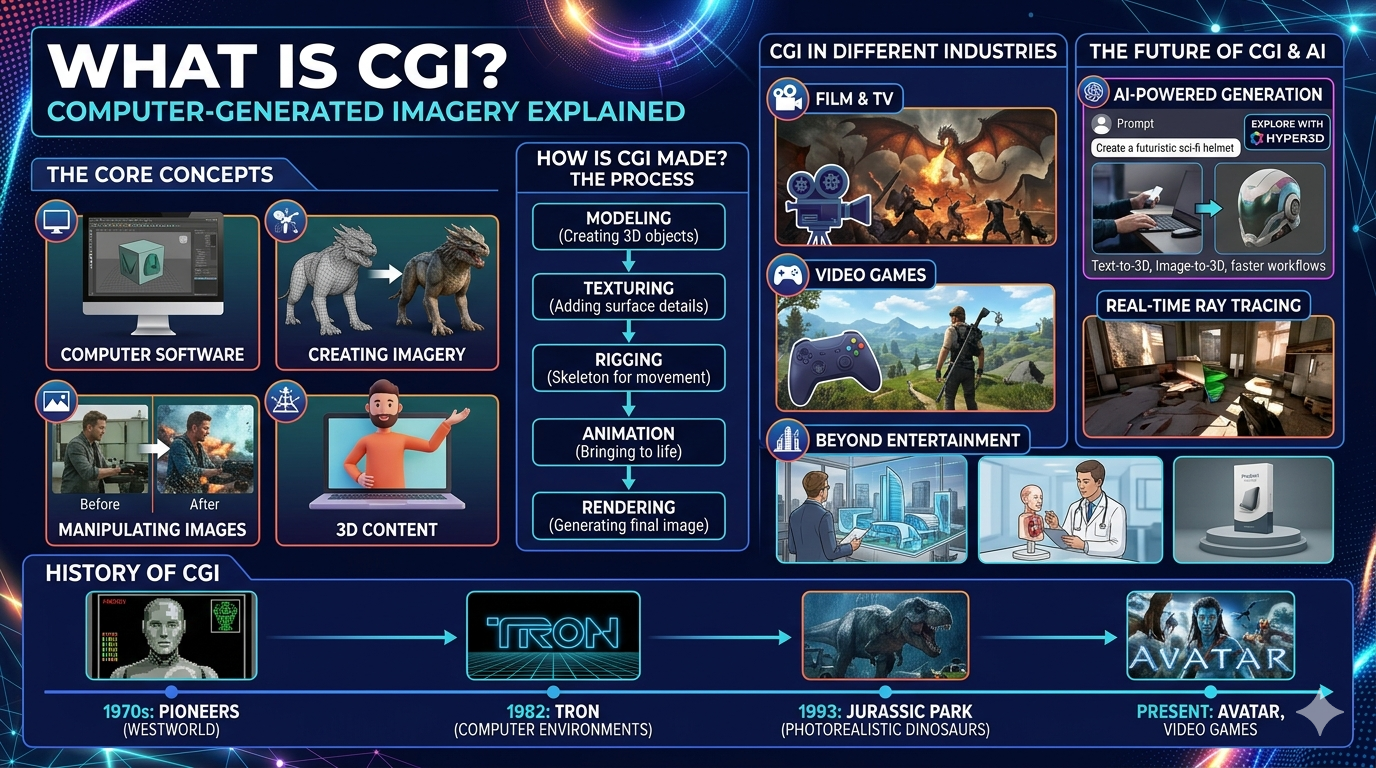
CGI is the acronym for Computer-Generated Imagery. The ??magery??part is key??t?? not just about 3D models. CGI can encompass 2D graphics, 3D animations, and even static images. It?? any visual content that has been created or significantly altered using computer software. This broad definition is why CGI is found in so many different fields, from animated films to architectural mockups.
How is CGI Made? The Process Behind the CGI Meaning
The creation of CGI is a multi-step process that traditionally requires a high level of skill and powerful software. The general workflow includes:
The creation of CGI, which is central to the CGI meaning, is a multi-step process. It starts with Modeling, creating 3D objects. Then comes Texturing, adding surface details. Rigging provides a skeleton for movement, followed by Animation. The final step is Rendering, which generates the final image. This entire process contributes to the overall CGI meaning.
While industry-standard tools like Maya, Blender, and 3ds Max offer incredible control, they also come with a steep learning curve. This is where new platforms are changing the game. Hyper3D, for example, simplifies this complex workflow with intuitive tools like its text-to-3D model and image-to-3D converters, making 3D creation more accessible to everyone.
A Brief History of CGI: The Evolving CGI Meaning
The journey of CGI from a niche academic experiment to a cornerstone of modern media is a fascinating story of innovation and artistic ambition. This history is key to understanding the full CGI meaning.
The Pioneers of CGI
The roots of CGI can be traced back to the 1970s. The 1973 film *Westworld* was one of the first to use 2D CGI to represent the android?? point of view. A few years later, *Star Wars* (1977) used computer graphics for the Death Star briefing sequence. However, it was *Tron* (1982) that truly showcased the potential of CGI, with its extensive use of computer-generated environments and characters.
The Evolution of CGI in Film
The 1990s marked a turning point for CGI in cinema. *Jurassic Park* (1993) stunned audiences with its photorealistic dinosaurs, smoothly blending CGI with live-action footage. Two years later, *Toy Story* (1995) became the first feature-length film to be entirely computer-animated, launching a new era of animated storytelling. Since then, CGI has become an essential tool for filmmakers, used not only for creating fantastical worlds but also for more subtle effects, like digital set extensions and de-aging actors.
CGI in Different Industries: The Broad CGI Meaning
While film is where CGI often gets the most attention, its impact is felt across a wide range of industries, demonstrating the true breadth of the CGI meaning. The CGI meaning extends far beyond just movies.
CGI in Film and Television
In film and television, CGI is the engine of imagination. It allows creators to build immersive worlds, bring mythical creatures to life, and stage epic battles that would be impossible to film practically. From the sprawling landscapes of *Avatar* to the intricate visual effects in a series like *Game of Thrones*, CGI has become a vital part of the storytelling process. For independent filmmakers and studios, tools like Hyper3D?? film production 3D generator are opening up new possibilities for creating high-quality visual effects.
CGI in Video Games
Modern video games are essentially interactive CGI experiences. Every character, environment, and object is a computer-generated asset. The industry constantly pushes the boundaries of real-time rendering, the process of generating images so quickly that they can be manipulated in real time by the player. This is what allows for the incredibly detailed and responsive worlds we see in today?? games.
CGI Beyond Entertainment
The applications of CGI extend far beyond the screen. Architects use it to create realistic visualizations of buildings before they are constructed. Medical professionals use CGI for surgical planning and to create detailed anatomical models. Product designers and advertisers use it to create compelling visuals of their products. The versatility of CGI makes it a powerful tool for communication and design in countless fields.
My First-Hand Experience with CGI Tools
To get a better sense of the current state of CGI creation, I spent some time with two very different tools: Blender, a powerful and free open-source 3D creation suite, and Hyper3D?? Rodin, an AI-powered generator. My goal was to create a simple 3D object?? futuristic helmet??ith both.
With Blender, the process was meticulous. I started with a basic cube and began shaping it, extruding faces, and refining the geometry. The level of control was immense, but as a relative newcomer, it was also overwhelming. After a couple of hours, I had a decent-looking helmet, but it was a slow and challenging process.
Then I tried Rodin, one of Hyper3D's primary tools. I simply typed in
"a futuristic sci-fi helmet, white with blue glowing accents." Within a minute, I had a fully formed 3D model. The speed was incredible. While I didn?? have the same granular control as in Blender, the ability to generate a high-quality model from a simple text prompt was a completely different and much faster workflow.
Objective Comparison of CGI Tools
To give you a clearer picture, here?? a comparison of my experience with Blender and Hyper3D's Rodin:
| Feature | Blender | Hyper3D (Rodin) |
|---|---|---|
| Ease of Use | Steep learning curve, requires significant time to master. | Extremely easy to use, intuitive text-based interface. |
| Speed | Slow and methodical, requires manual modeling and sculpting. | Incredibly fast, generates models in minutes. |
| Control | Offers complete control over every aspect of the model. | Less granular control, relies on AI interpretation of the prompt. |
| Cost | Free and open-source. | Subscription-based, with different tiers of access. |
| Best For | Professional artists, detailed character and environment design. | Quick prototyping, concept art, and accessible 3D creation. |
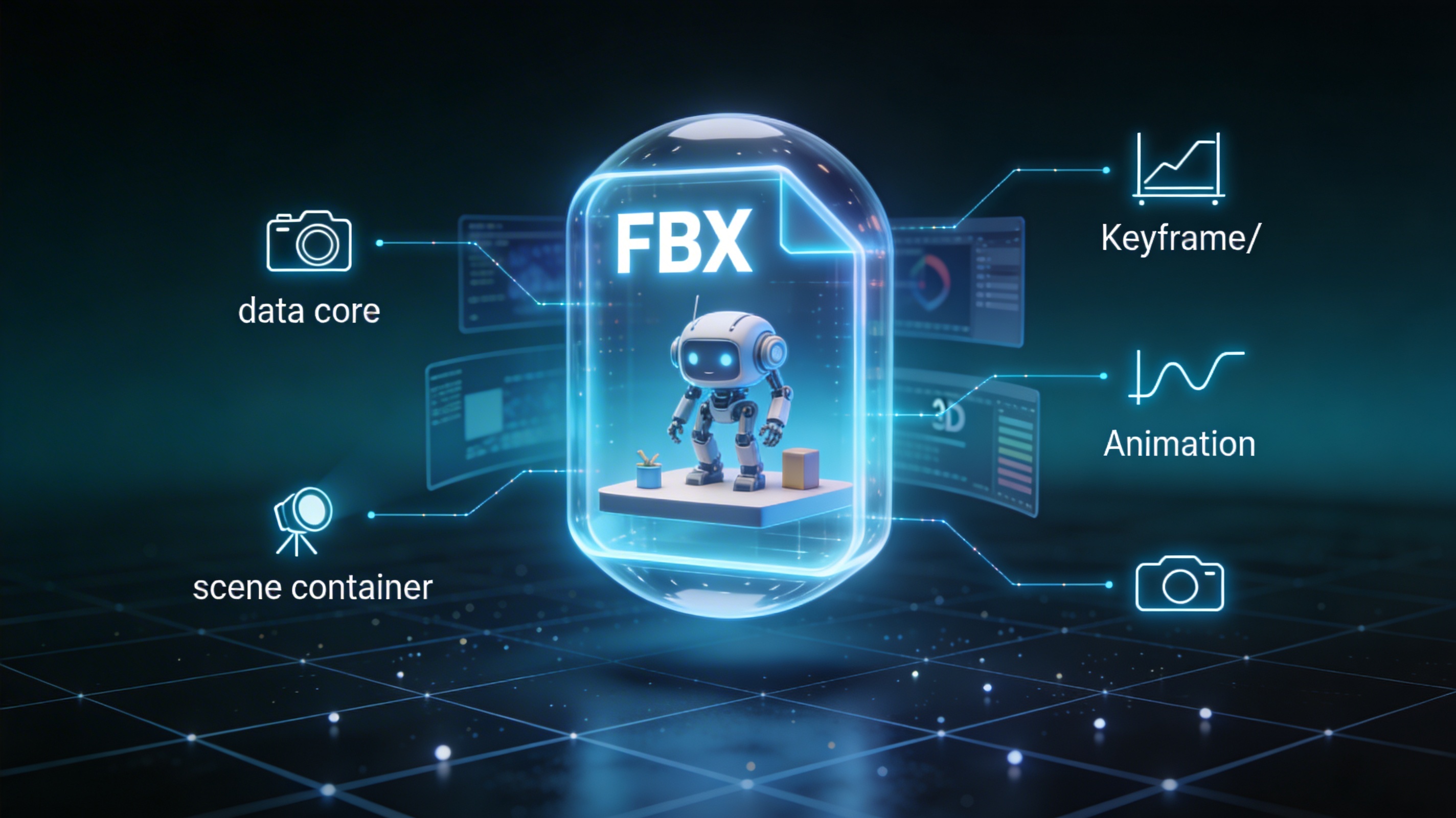
Both tools are powerful in their own right, but they serve different needs. If you??e a professional artist who needs complete control over your creations, Blender is an excellent choice. If you??e a designer, developer, or hobbyist who wants to create 3D assets quickly and easily, Hyper3D?? suite of tools, including Rodin for generation and OmniCraft for editing and format conversion (to formats like STL, FBX, OBJ, GLB, and USDZ), is a fantastic option. This accessibility is a key part of the modern CGI meaning.
The Future of CGI: The Expanding CGI Meaning
The world of CGI is in a constant state of flux, with new technologies emerging that promise to make 3D creation even more powerful and accessible.
The Rise of AI in CGI
Artificial intelligence is having a profound impact on the CGI industry, and this is a huge part of the current CGI meaning. AI-powered tools can now automate many of the more tedious aspects of 3D creation, from modeling and texturing to animation. This not only speeds up the workflow but also opens up 3D creation to a wider audience of artists and designers. The ability to generate 3D models from text or images, once the realm of science fiction, is now a reality, and it's central to the evolving CGI meaning.
Real-Time Ray Tracing and Beyond
Real-time ray tracing is another technology that is pushing the boundaries of what?? possible in CGI. Ray tracing is a rendering technique that simulates the physical behavior of light, resulting in incredibly realistic images. In the past, ray tracing was so computationally expensive that it could only be used for pre-rendered content like films. Now, thanks to advances in hardware, real-time ray tracing is becoming a standard feature in video games, creating a new level of immersion and realism.
Frequently Asked Questions (FAQ) about the CGI Meaning
What is the difference between CGI and VFX?
VFX, or visual effects, is a broader category that encompasses all effects that are added to live-action footage in post-production. CGI is a subset of VFX that specifically refers to effects created using computer-generated imagery. So, while all CGI in a live-action film is a form of VFX, not all VFX is CGI (for example, practical effects like miniatures or pyrotechnics are also VFX).
Is CGI animation real animation?
Yes, absolutely. CGI animation is a form of animation that uses computer software to create moving images. While the tools are different from traditional hand-drawn animation, the underlying principles of movement, timing, and storytelling are the same. It?? a different medium for the same art form.
How much does CGI cost?
The cost of CGI can vary dramatically, from free for a student project using open-source software to hundreds of millions of dollars for a major Hollywood blockbuster. The cost depends on the complexity of the project, the size of the team, and the software and hardware required.
Can I learn CGI on my own?
Yes, you can. There are countless online tutorials, courses, and communities dedicated to teaching CGI. With dedication and the right resources, you can learn to create your own 3D art and animations. Tools like Blender have made it easier than ever to get started without a significant financial investment.
What is the best software for CGI?
There is no single ??est??software for CGI. The right tool depends on your needs and budget. For professionals, industry standards include Maya and 3ds Max. For those on a budget, Blender is a powerful and free alternative. And for those who want to use the power of AI for quick and easy 3D creation, platforms like Hyper3D are leading the way.
Conclusion
The CGI meaning has evolved from a technical term to a cornerstone of modern visual culture. Understanding the CGI meaning is to understand a key part of modern media. It?? a field that is constantly innovating, driven by the desire to create more immersive and believable worlds. Whether you??e a seasoned professional or just starting your journey into 3D, there has never been a more exciting time to be a part of this digital revolution. With the rise of AI and real-time technologies, the power to create stunning visual experiences is more accessible than ever. So why not dive in and see what you can create? Explore the possibilities with tools like Hyper3D and start bringing your own digital creations to life.