

'''
# What Is PLA? The Most Popular 3D Printing Filament
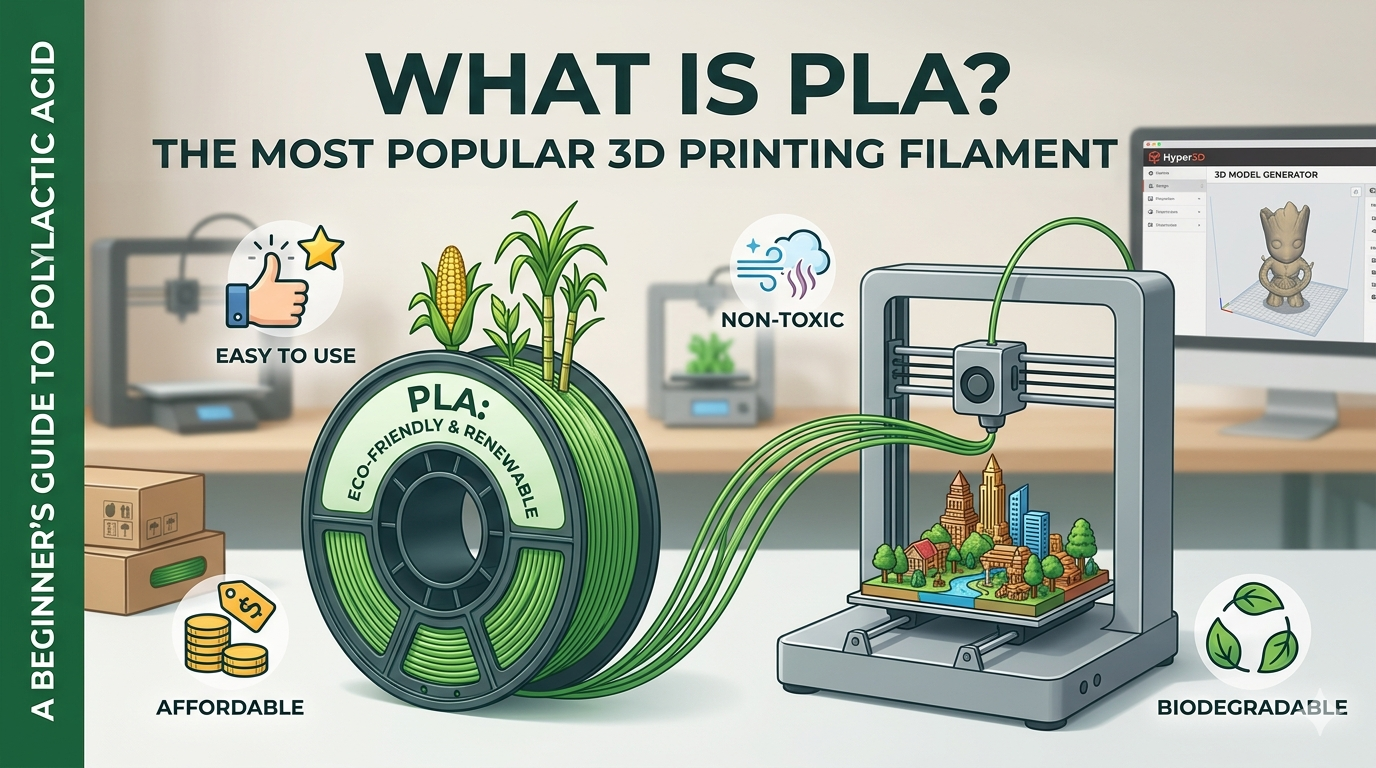
Polylactic Acid, or PLA, is the most common filament used in 3D printing today. If you're just getting started with 3D printing, chances are you've already encountered it. Its popularity comes from its ease of use, affordability, and the fact that it's more environmentally friendly than other plastics. Whether you're using a simple desktop printer or a more advanced machine, PLA is a reliable choice for a wide range of projects. In this article, we'll explore everything you need to know about what is PLA filament, what it's made of, and how to get the best results with it. A good understanding of what is PLA filament is fundamental for any 3D printing enthusiast. Understanding what is PLA filament is the first step to mastering 3D printing. We'll also touch on some of the amazing tools available, like Hyper3D's 3D printing model generator, that can help you bring your ideas to life.
What is PLA Filament and What is it Made Of?
PLA is a thermoplastic polyester derived from renewable resources like corn starch or sugarcane. This makes it a bioplastic, which means it's biodegradable under the right conditions. Unlike petroleum-based plastics, PLA is produced through a process of fermentation and polymerization of lactic acid. This sustainable origin is a major reason for its popularity among hobbyists and professionals who are conscious about their environmental impact. This is a key aspect of what is PLA filament. The production process for PLA is also more energy-efficient compared to traditional plastics, further solidifying its status as a green material in the world of 3D printing.
Key Properties of PLA Filament - What is PLA filament capable of?
Understanding the properties of PLA is crucial for successful 3D printing. Here's a breakdown of its key characteristics:
Strength and Stiffness
PLA is known for its high stiffness and good tensile strength, which means it can withstand a fair amount of stress before it deforms. This makes it a great material for a variety of applications, from creating detailed models to functional prototypes. However, it's also quite brittle, so it may not be the best choice for parts that need to bend or flex. For projects requiring more durability, you might consider other materials or blends.
Temperature Resistance
One of the most significant limitations of PLA is its low temperature resistance. With a glass transition temperature of around 60�C (140�F), PLA parts can start to deform and lose their shape when exposed to heat. This makes it unsuitable for applications where the printed object will be in a hot environment, such as inside a car on a sunny day or for parts of a machine that generate heat. For high-temperature applications, you would need to consider materials like ABS or PETG.
Printability and Aesthetics
This is where PLA truly shines. It is incredibly easy to print with, making it the perfect material for beginners. It has a low printing temperature (typically between 190-220�C), doesn't require a heated bed, and has minimal warping. This allows for the creation of prints with sharp details, smooth surfaces, and a glossy finish. This print quality is a defining characteristic of what is PLA filament. The low shrinkage factor of PLA also means that you can print large objects with high dimensional accuracy.
Colors and Finishes
PLA filament is available in a vast array of colors and finishes. From standard primary colors to translucent, metallic, and even wood- or carbon-fiber-filled varieties, the aesthetic possibilities are nearly endless. This wide selection allows for a great deal of creativity and customization in your 3D printing projects, whether you're making a vibrant piece of art or a prototype that needs to mimic a specific material.
Advantages of Using PLA Filament
There are many reasons why PLA is the most popular 3D printing filament. Here are some of its main advantages:
Ease of Use
As mentioned earlier, PLA is incredibly user-friendly. Its low printing temperature and minimal warping make it a forgiving material for those new to 3D printing. You can achieve high-quality prints with minimal tinkering and calibration, which allows you to focus more on your designs and less on troubleshooting your printer.
Affordability
Compared to more specialized filaments, PLA is very affordable. Its low cost makes it an excellent choice for everyday printing, prototyping, and large projects. You can experiment and iterate on your designs without breaking the bank, which is a huge advantage for hobbyists, students, and small businesses. The affordability is a key factor in understanding what is PLA filament's popularity.
Eco-Friendly
The fact that PLA is derived from renewable resources and is biodegradable makes it a more sustainable choice than petroleum-based plastics. While it requires industrial composting facilities to biodegrade efficiently, it's still a step in the right direction for reducing the environmental impact of 3D printing.
Non-Toxic
PLA is non-toxic and doesn't release harmful fumes when printed, unlike some other filaments like ABS. This makes it a safer material to use in homes, schools, and offices without the need for a dedicated ventilation system. It has a slightly sweet smell when heated, which is much more pleasant than the chemical odors of other plastics.
Disadvantages and Limitations of PLA
Despite its many advantages, PLA is not without its drawbacks. It's important to be aware of its limitations to choose the right material for your project.
Brittleness
PLA is a rigid material, but it's also quite brittle. This means it's more likely to shatter upon impact compared to more durable filaments like ABS or PETG. This makes it less suitable for functional parts that will be subjected to stress or repeated use.
Low UV Resistance
When exposed to direct sunlight for extended periods, PLA can become even more brittle and may lose its color. This makes it a poor choice for outdoor applications or any parts that will be exposed to UV radiation.
Limited Industrial Applications
Due to its low temperature resistance and brittleness, PLA is not typically used for industrial applications that require high strength, durability, and heat resistance. For demanding engineering applications, materials like ABS, PETG, or nylon are generally preferred.
Common Applications for PLA Filament
Given its properties, PLA is best suited for a wide range of applications, particularly those where aesthetics and ease of printing are more important than mechanical performance.
Prototyping and Modeling
PLA is an excellent choice for creating detailed visual prototypes and models. Its ability to produce fine details and smooth surfaces makes it ideal for showcasing product designs, architectural models, and other visual concepts.
Hobbyist and Decorative Prints
From figurines and toys to custom phone cases and decorative items, PLA is the go-to material for hobbyists. The wide variety of colors and finishes available allows for endless creativity, and its ease of use makes it a fun and rewarding material to work with.
Educational Purposes
PLA's safety and ease of use make it a perfect material for educational settings. Students can learn about 3D printing and design without the need for specialized equipment or ventilation. It's a great way to bring ideas to life in the classroom, and a safe introduction to what is PLA filament.
My First-Hand Experience with PLA and 3D Model Generators
As someone who has spent a lot of time with 3D printers, I can personally attest to the reliability of PLA. My first few prints were all with PLA, and it was a great way to learn the ropes without getting frustrated. I recently decided to create a custom phone stand, and I used Hyper3D's AI 3D model generator to get started. The tool was incredibly intuitive, and I was able to generate a basic design in just a few minutes. I then used an image to STL converter to add a custom logo to the stand. The process was smooth, and I had a printable file ready to go in no time.
I printed the stand with a standard white PLA filament, and the results were fantastic. The layers were smooth, the details were crisp, and the stand was sturdy enough for its intended purpose. I also experimented with Hyper3D's image to 3D tool to create a small figurine from a photo, and the results were equally impressive. The ability to quickly and easily generate 3D models from various inputs has really opened up a new world of creative possibilities for me. This hands-on experience really helped me understand what is PLA filament and its capabilities.
PLA vs. Other Filaments (ABS, PETG)
Choosing the right filament is crucial for the success of your 3D printing project. Here's a quick comparison of PLA with two other popular filaments: ABS and PETG.
PLA vs. ABS
| Feature | PLA | ABS |
|---|---|---|
| Strength | Good | Excellent |
| Durability | Low (brittle) | High (impact resistant) |
| Temperature Resistance | Low | High |
| Ease of Printing | Easy | Difficult |
| Fumes | Non-toxic | Toxic |
Recommendation: Use PLA for prototypes, models, and hobbyist prints. Use ABS for functional parts that require high strength, durability, and heat resistance, but be sure to use it in a well-ventilated area.
PLA vs. PETG
| Feature | PLA | PETG |
|---|---|---|
| Strength | Good | Excellent |
| Flexibility | Low | Good |
| Durability | Low | High |
| Food Safe | Generally not | Often is |
| Ease of Printing | Easy | Moderate |
Recommendation: Use PLA for general-purpose printing. Use PETG for functional parts that need to be more durable and flexible than PLA, or for applications where food safety is a concern.
Tips for Getting the Best Prints with PLA
While PLA is easy to work with, there are a few things you can do to ensure you get the best possible results.
Optimal Printer Settings
For most PLA filaments, a printing temperature between 190-220�C and a bed temperature between 50-60�C will work well. It's always a good idea to print a temperature tower to find the optimal settings for your specific filament and printer.
Cooling
A part cooling fan is essential for getting clean prints with PLA. It helps to solidify the molten plastic quickly, which prevents drooping and allows for sharper details and better bridging.
Storage
PLA is hygroscopic, which means it absorbs moisture from the air. This can lead to brittle filament and poor print quality. It's important to store your PLA in a dry place, preferably in a sealed bag with a desiccant pack.
The Future of PLA and Sustainable 3D Printing
As the 3D printing industry continues to grow, so does the demand for sustainable materials. PLA is leading of this movement, and we can expect to see even more innovations in the future. Researchers are constantly developing new PLA blends and composites with improved properties, such as increased strength, flexibility, and heat resistance. The development of more efficient and accessible composting methods will also be crucial for realizing the full environmental benefits of PLA. The ongoing innovation in materials science will continue to redefine what is PLA filament and expand its applications. Tools like a 3D format converter also play a role in a sustainable workflow by allowing for easy conversion between different file formats, reducing the need for reprints and wasted material.
Frequently Asked Questions (FAQ)
Is PLA filament food safe?
While the raw PLA material is generally considered food-safe, the 3D printing process can introduce small gaps and layers where bacteria can grow. It's not recommended to use 3D printed PLA parts for direct, long-term contact with food unless they are coated with a food-safe sealant.
How long does it take for PLA to biodegrade?
In an industrial composting facility, PLA can biodegrade in as little as 90 days. However, in a typical home compost bin or landfill, it can take much longer, potentially hundreds of years.
Can you paint PLA prints?
Yes, PLA prints are very easy to paint. It's best to prime the surface first to ensure good adhesion, and then you can use acrylic paints to add color and detail to your prints.
What is the best way to store PLA filament?
The best way to store PLA is in a sealed, airtight container or bag with a desiccant pack to keep it dry. This will prevent the filament from absorbing moisture and becoming brittle.
Why is my PLA filament so brittle?
Understanding what is PLA filament is essential for anyone involved in 3D printing.
If your PLA filament is brittle, it's most likely because it has absorbed too much moisture. You can try drying it out in a filament dryer or a low-temperature oven to restore its properties.
'''