

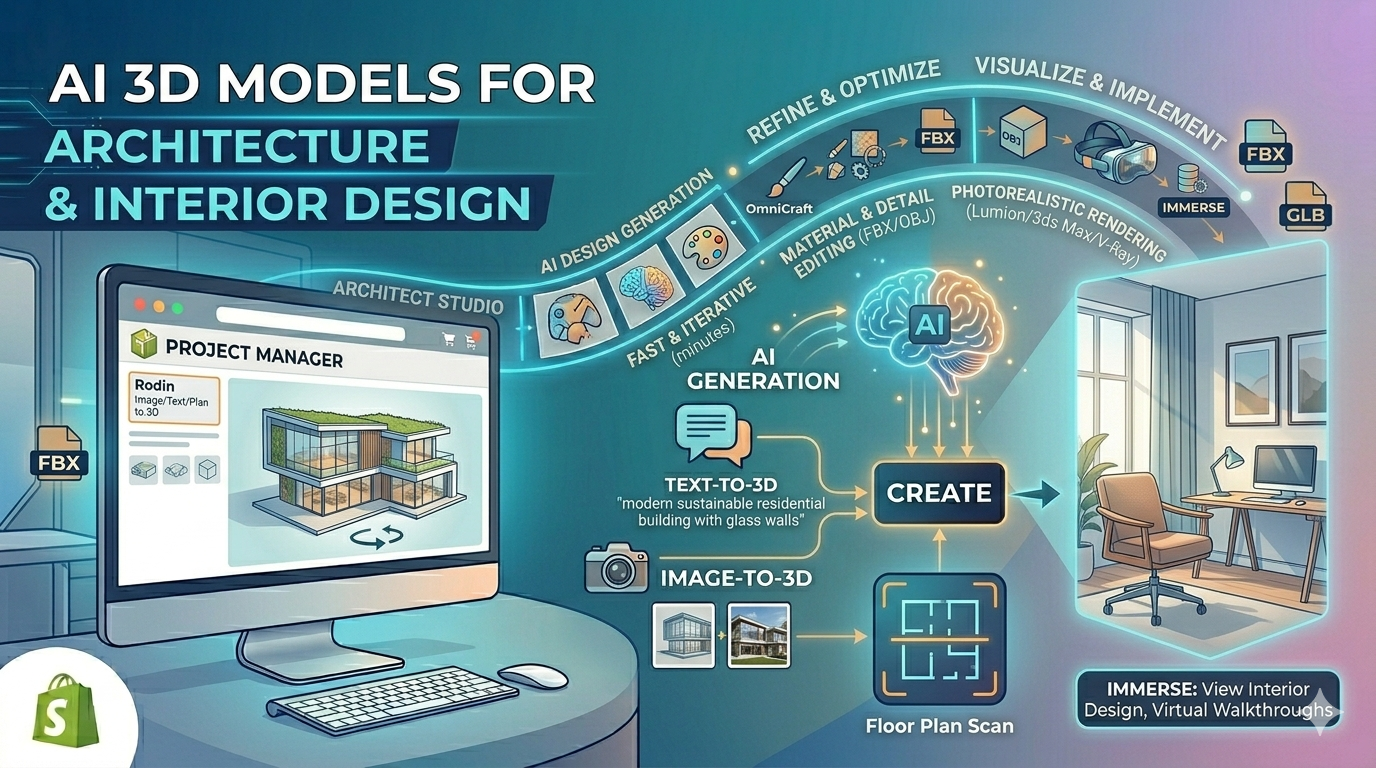
AI 3D Models for Architecture & Interior Design
The world of architecture and interior design is undergoing a significant transformation. For decades, creating realistic visualizations of projects was a time-consuming and expensive process, often requiring specialized skills and powerful hardware. But the rise of artificial intelligence is changing the game. AI-powered tools are making 3D architectural visualization more accessible, faster, and more efficient than ever before. Platforms like Hyper3D, Autodesk 3ds Max, and Lumion are leading of this shift, offering innovative solutions for architects, designers, and real estate professionals.
What is 3D Architectural Visualization?
fundamentally, creating 3D visuals for architecture is the process of creating photorealistic images or animations of architectural designs. It allows stakeholders to see what a project will look like before it?? built, helping to identify potential design flaws, communicate ideas more effectively, and market properties with greater impact. This technology has become an essential part of the modern architectural workflow, enabling designers to explore and iterate on their ideas in a virtual environment.
The benefits of this technology are numerous. It helps to bridge the communication gap between architects and clients, providing a clear and accurate representation of the final product. It also streamlines the design process, allowing for quicker decision-making and reducing the risk of costly errors during construction. For real estate professionals, high-quality visualizations are a powerful marketing tool, helping to attract potential buyers and tenants.
Top AI-Powered Tools for 3D Architectural Visualization
The market for 3D architectural visualization software is vast and varied, with a growing number of tools incorporating AI to enhance their capabilities. Here?? a look at some of the leading platforms in this space.
Hyper3D's Architecture 3D Model Generator
Hyper3D offers a suite of AI-powered tools designed to simplify the 3D modeling process. Their architecture 3D model generator is particularly noteworthy. It allows users to generate detailed 3D models from text prompts or 2D images, making it an incredibly intuitive tool for both seasoned professionals and newcomers to the field. The platform also offers a real estate 3D model generator tailored to the specific needs of that industry.
Other Notable Platforms
Beyond Hyper3D, several other platforms are making waves in the world of AI-driven 3D design for architecture. Autodesk 3ds Max has long been a staple in the industry, and its advanced modeling and rendering capabilities are now being augmented with AI features. V-Ray and Corona are powerful rendering engines known for their photorealistic output, while Lumion and Twinmotion offer real-time rendering solutions that are perfect for creating immersive architectural experiences.
My First-Hand Experience with AI 3D Model Generators
As someone who has spent years working with traditional 3D modeling software, I was eager to see how Hyper3D's AI 3D model generator stacked up. I decided to test out the Rodin tool, using a simple text prompt to generate a model of a modern residential building. I was immediately impressed by the speed and quality of the results. Within minutes, I had a detailed 3D model that was ready for further refinement.
I experimented with several of the generation modes, including Gen-2, Default, and Focal. Each mode produced a slightly different aesthetic, giving me a range of options to choose from. I also tested the image to 3D feature, uploading a photograph of a building facade and watching as the AI transformed it into a three-dimensional model. The process was smooth and the results were surprisingly accurate.
Once I was happy with my model, I used the OmniCraft tool to make some minor adjustments and then exported it in a few different formats, including FBX and OBJ. The platform's 3D format converter is a handy feature, ensuring compatibility with a wide range of other software. Overall, my experience with Hyper3D was overwhelmingly positive. The platform is intuitive, powerful, and genuinely fun to use.
Objective Comparison of 3D Architectural Visualization Tools
To provide a clearer picture of the field, here?? a comparison of some of the most popular tools for architectural design available today.
| Tool | Key Features | Best For | Pros | Cons |
|---|---|---|---|---|
| Hyper3D | AI-powered 3D model generation from text and images, real-time editing, multiple export formats. | Architects, designers, and real estate professionals looking for a fast and intuitive workflow. | Incredibly easy to use, fast generation times, versatile export options. | As a newer platform, it may not have all the advanced features of more established software. |
| Autodesk 3ds Max | Advanced modeling, animation, and rendering capabilities. | Experienced 3D artists and large studios. | Industry-standard software with a vast feature set. | Steep learning curve, can be expensive. |
| Lumion | Real-time rendering, large asset library, intuitive interface. | Architects and designers who need to create high-quality visualizations quickly. | Easy to learn, fast rendering speeds, beautiful results. | Less control over the fine details of the rendering compared to V-Ray or Corona. |
| V-Ray | Photorealistic rendering, advanced lighting and material options. | 3D artists who demand the highest level of realism. | Unparalleled image quality, highly customizable. | Can be complex to set up and requires a powerful computer. |
How to Choose the Right Tool for Your Needs
With so many options available, choosing the right tool for your architectural projects can be a challenge. The best choice for you will depend on your specific needs, budget, and skill level.
If you're new to 3D modeling or need to create visualizations quickly, a tool like Hyper3D or Lumion is a great choice. These platforms are designed to be intuitive and easy to use, allowing you to create stunning results without a steep learning curve. If you're an experienced 3D artist who needs a high level of control and customization, a more traditional software package like Autodesk 3ds Max or V-Ray might be a better fit.
Ultimately, the best way to find the right tool is to experiment. Many of these platforms offer free trials or demos, so take the time to try them out and see which one works best for you.
The Future of 3D Architectural Visualization
The field of 3D architectural visualization is constantly evolving, and the rise of AI is accelerating that change. In the coming years, we can expect to see even more powerful and intuitive tools that will further democratize the creation of 3D content. From automated floor plan generation to AI-powered design suggestions, the possibilities are endless. As technology continues to advance, creating 3D visuals will become an even more integral part of the design and construction process.
Frequently Asked Questions (FAQs)
What is the best software for 3D architectural visualization?
There is no single "best" software for creating 3D architectural designs. The right choice depends on your specific needs and budget. For ease of use and speed, tools like Hyper3D and Lumion are excellent options. For maximum control and realism, Autodesk 3ds Max and V-Ray are industry standards.
How much does 3D architectural visualization cost?
The cost of creating 3D architectural designs can vary widely depending on the complexity of the project and the software used. Some platforms, like Hyper3D, offer subscription-based pricing, while others, like Autodesk 3ds Max, require a significant upfront investment.
How long does it take to create a 3D architectural visualization?
The time it takes to create a 3D architectural design can range from a few minutes to several weeks, depending on the level of detail required. AI-powered tools like Hyper3D can significantly speed up the process, allowing you to generate models in a fraction of the time it would take with traditional methods.
What is the difference between 3D rendering and 3D visualization?
3D visualization is the broader term for the process of creating 3D graphics, while 3D rendering is the specific step of generating a 2D image from a 3D model. In the context of architecture, visualization encompasses the entire workflow, from modeling to rendering.
Can I create a 3D model from a 2D image?
Yes, with AI-powered tools like Hyper3D, you can now create a 3D model from a 2D image. This technology is still evolving, but it has the potential to change the way we create 3D content.
Conclusion
Creating 3D visuals has become an essential tool for architects, designers, and real estate professionals. The emergence of AI-powered platforms like Hyper3D is making this technology more accessible and powerful than ever before. Whether you're a seasoned pro or just starting, there's never been a better time to explore the world of 3D design for architecture. If you're ready to see what AI can do for your workflow, I highly recommend giving Hyper3D's architecture 3D model generator a try.