

AI 3D Printed Miniatures: D&D Figures, Wargaming Minis
For years, tabletop gamers have been collecting, painting, and battling with miniatures. From the heroic adventurers in Dungeons & Dragons to the futuristic soldiers in Warhammer 40,000, these tiny figures bring our favorite games to life. But what if you could create your own custom miniatures, perfectly tailored to your imagination? Thanks to the intersection of AI and 3D printing, that's now a reality. In this article, we'll explore the exciting world of AI-generated 3D printed miniatures, and how you can start creating your own unique figures for your tabletop adventures.
The World of 3D Printable Miniatures
The hobby of collecting and painting miniatures has been around for decades, but the advent of 3D printing has opened up a whole new realm of possibilities. No longer are you limited to the miniatures you can find in a store. With a 3D printer and a digital model, you can create almost any miniature you can imagine.
Where to Find Models
If you're new to the world of 3D printed miniatures, you might be wondering where to find the digital files, or STLs, needed to print them. There are several great resources available:
- Marketplaces: Websites like MyMiniFactory and Cults3D are treasure troves of high-quality 3D models, many of which are designed specifically for tabletop gaming. You can find everything from individual character models to entire armies.
- Communities: Online communities, such as the r/PrintedMinis subreddit, are fantastic places to connect with other enthusiasts, share your creations, and find free models. You'll often find that creators share their work freely with the community.
- Design Your Own: For the ultimate in customization, you can design your own miniatures from scratch. This traditionally required a high level of skill in 3D modeling software, but as we'll see, AI is making this process more accessible than ever.
The Rise of AI in Miniature Design
The biggest hurdle for many aspiring miniature creators has been the technical skill required to use complex 3D modeling software. This is where AI comes in. New AI-powered tools are making it possible for anyone to create their own custom 3D printed miniatures, regardless of their technical expertise. These tools can generate 3D models from simple text descriptions, opening up a world of creative possibilities.
Creating Your Own Miniatures with AI
Imagine being able to describe your perfect D&D character ??a grizzled dwarf fighter with a braided beard and a battle-axe ??and have a 3D model ready to print in minutes. That's the power of AI in miniature creation. Let's take a closer look at how it works.
From Text to Tabletop: AI 3D Model Generators
AI 3D model generators are a new class of tools that use artificial intelligence to create 3D models from text prompts. You simply type in a description of the miniature you want to create, and the AI will generate a 3D model for you. Some tools can even create models from images, allowing you to turn a 2D drawing into a 3D printable figure. This technology is still evolving, but it's already producing impressive results.
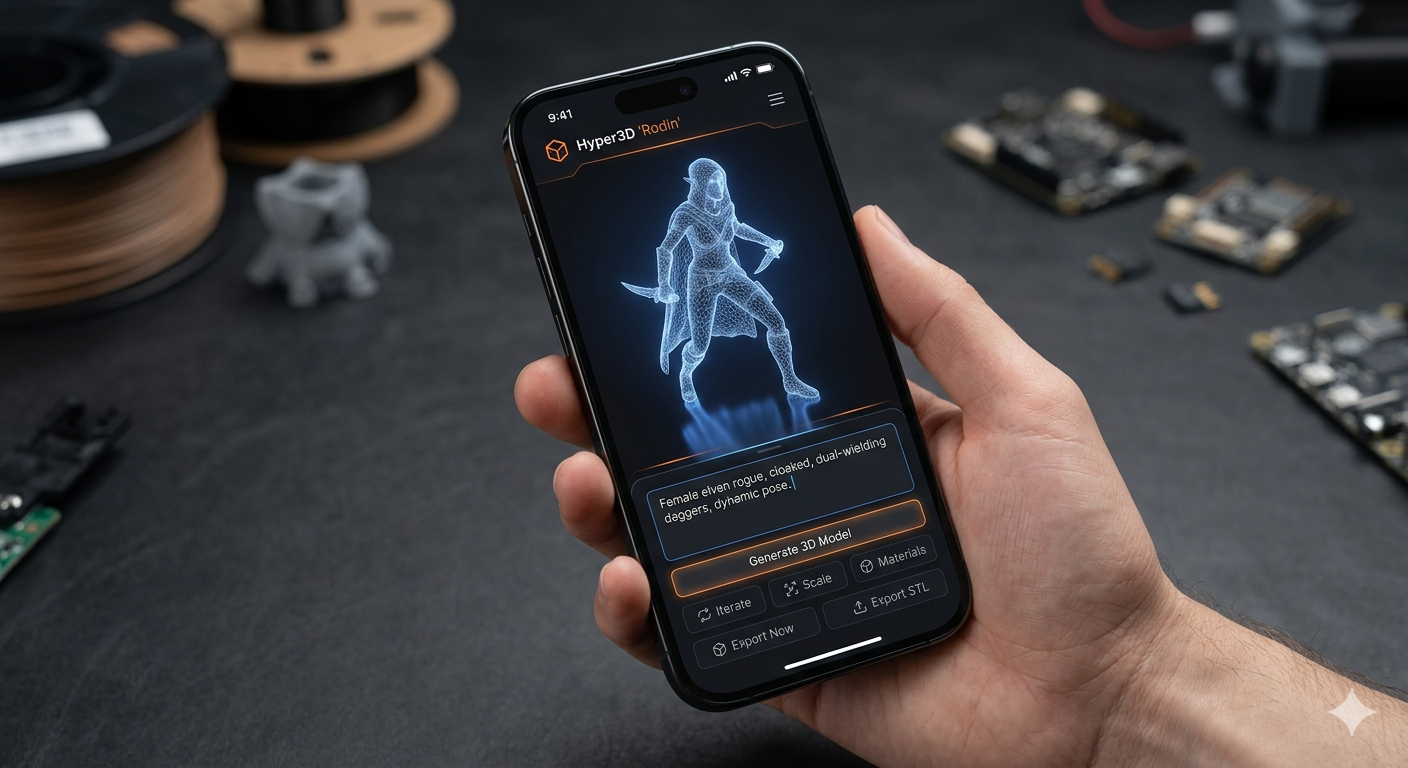
One such tool is Hyper3D's AI 3D model generator, Rodin. Rodin is a powerful yet easy-to-use tool that can generate a wide variety of 3D models, including miniatures for tabletop gaming. There are other tools available as well, each with its own strengths and weaknesses. The key is to find a tool that fits your needs and workflow.
My First-Hand Experience with AI Miniature Generation
To get a better sense of how these AI tools work, I decided to try one out for myself. I used a text-to-3D generator to create a custom miniature for an upcoming D&D campaign. I wanted to create a female elf rogue with a hooded cloak and a pair of daggers. I started by typing in a simple prompt: "female elf rogue with a hooded cloak and daggers."
The initial results were promising, but not quite what I had in mind. The cloak was a bit too bulky, and the daggers were too small. I iterated on my prompt, adding more detail and specifying the style I was going for. After a few tries, I had a model that I was happy with. The whole process took less than an hour, which is a fraction of the time it would have taken me to create a similar model from scratch.
Once I had the model, I needed to prepare it for printing. I used an image to STL converter to get the file in the right format. Hyper3D's OmniCraft tool is also great for this, as it can handle a variety of file formats, including STL, FBX, OBJ, GLB, and USDZ. I also used the image to 3D tool to experiment with creating a model from a sketch I had made.
I experimented with different generation modes like Gen-2, Default, and Speedy to see how they affected the output. Each mode offered a different balance of speed and detail, which was a nice feature to have. I was impressed with the level of detail the AI was able to capture. The final 3D printed miniature had a flowing cloak, intricate details on the daggers, and a dynamic pose. It was a truly unique miniature that I would have never been able to create on my own. For those looking to create custom avatars, Hyper3D also offers ChatAvatar, which is another interesting application of this technology.
Comparing Your Options for 3D Printed Miniatures
With so many ways to get your hands on 3D printed miniatures, it can be tough to know which option is right for you. Let's break down the pros and cons of each approach.
Traditional Sculpting vs. Digital Creation
For a long time, the only way to get custom miniatures was to sculpt them by hand. This is a highly skilled art form that can produce amazing results, but it's also time-consuming and expensive. Digital creation, on the other hand, is much more accessible. With a 3D printer and a digital model, you can create miniatures at a fraction of the cost and in a fraction of the time.
Pre-made Models vs. AI-Generated Miniatures
When it comes to digital models, you have two main options: pre-made models and AI-generated models. Pre-made models are a great option if you're looking for something specific and don't have the time or inclination to create your own. However, you're limited to what's available on the market.
AI-generated miniatures, on the other hand, offer unlimited creative freedom. You can create any miniature you can imagine, perfectly tailored to your needs. The downside is that the technology is still new, and the results can sometimes be unpredictable. However, as the technology continues to improve, AI-generated miniatures are likely to become the go-to option for many tabletop gamers.
Getting Started with 3D Printing Your Miniatures
Once you have a digital model, you're ready to start printing your 3D printed miniatures. Here's what you'll need to get started.
Choosing the Right 3D Printer
There are two main types of 3D printers that are suitable for printing 3D printed miniatures: Fused Deposition Modeling (FDM) and resin printers. FDM printers are more affordable and easier to use, but they produce lower-resolution prints. Resin printers are more expensive and require more post-processing, but they can produce incredibly detailed prints that are perfect for miniatures.
Essential Tools and Materials
In addition to a 3D printer, you'll also need a few other tools and materials for your 3D printed miniatures. For FDM printers, you'll need a spool of filament, such as PLA or ABS. For resin printers, you'll need a bottle of resin and a curing station. You'll also want to have a set of files and clippers for cleaning up your prints.
Frequently Asked Questions about 3D Printed Miniatures
What is the best 3D printer for miniatures?
The best 3D printer for miniatures depends on your budget and your desired level of detail. If you're on a tight budget, an FDM printer is a great option. If you're looking for the highest quality prints, a resin printer is the way to go.
Can I 3D print miniatures with a resin printer?
Yes, resin printers are ideal for printing miniatures. They can produce incredibly detailed prints that are perfect for tabletop gaming.
How much does it cost to 3D print a miniature?
The cost of 3D printing a miniature depends on a number of factors, including the size of the miniature, the type of printer you're using, and the cost of your materials. However, it's generally much cheaper to print your own miniatures than it is to buy them from a store.
What is the best filament for 3D printing miniatures?
For FDM printers, PLA is a great all-around filament for printing miniatures. It's easy to use, affordable, and produces good results. For resin printers, there are a variety of resins available, each with its own unique properties.
Can you 3D print your own D&D miniatures?
Absolutely! 3D printing is a great way to create custom miniatures for your D&D campaigns. With a 3D printer and a little bit of creativity, you can bring your characters and monsters to life in a way that was never before possible.
Conclusion
The world of 3D printed miniatures is an exciting and rapidly evolving space. With the rise of AI-powered tools, it's easier than ever to create your own custom miniatures for your tabletop games. Whether you're a seasoned veteran or a complete beginner, there's never been a better time to get started with this amazing hobby. So fire up your 3D printer, and let your imagination run wild! And don't forget to check out Hyper3D's 3D printing model generator to get started on your next creation.