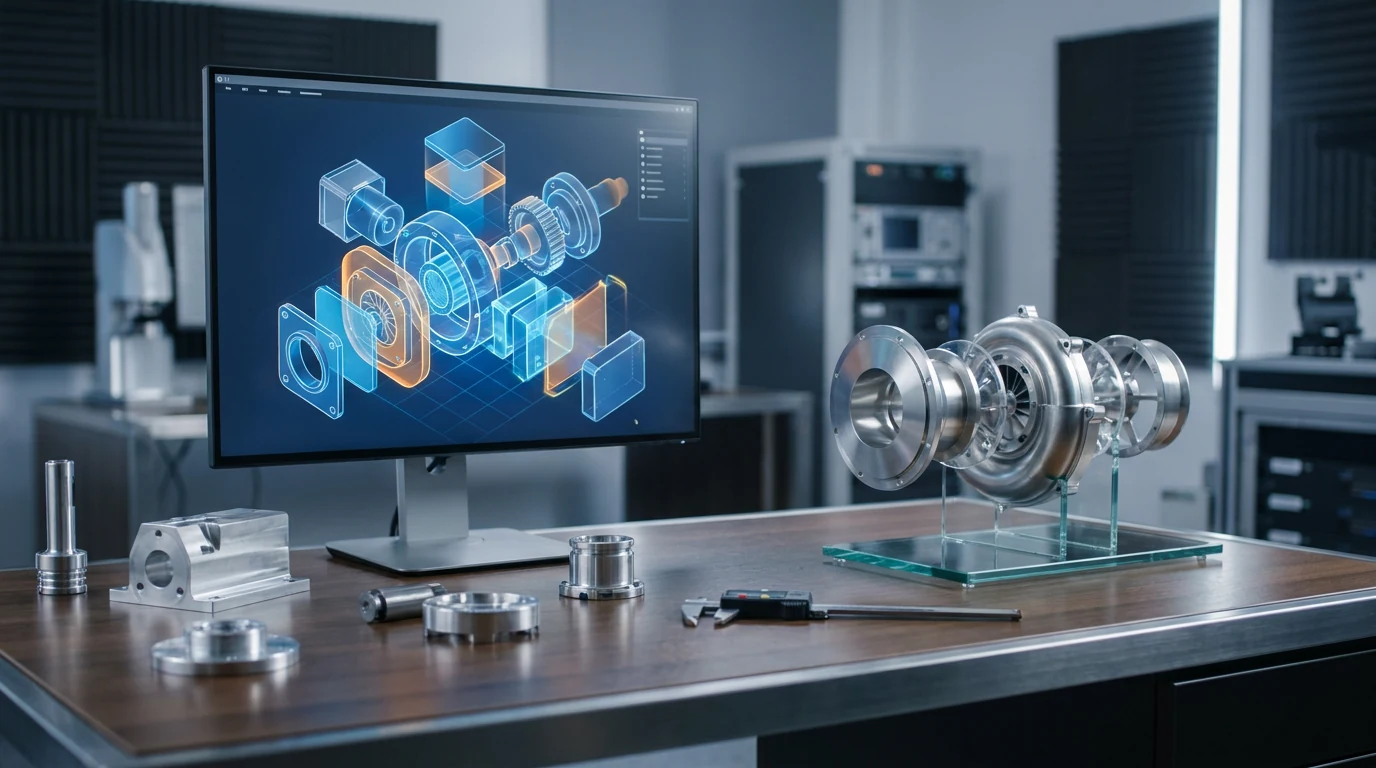
Output: textured polygon mesh
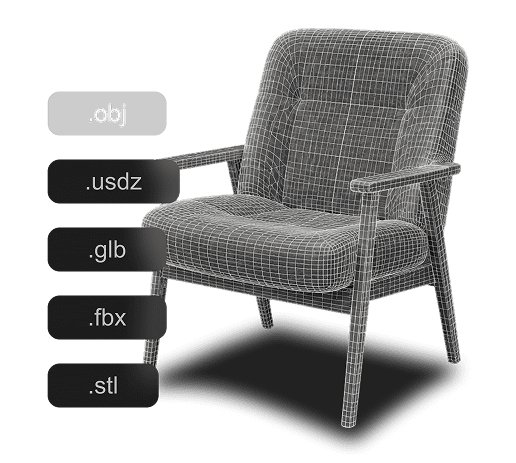
Every generation is a polygon mesh with PBR maps — base color, metallic, roughness, normal. Anodized aluminum reads as anodized aluminum on the turntable, not as gray plastic.
Foto da peça, esboço ou prompt vira uma malha texturizada em minutos. Visualize o conceito, faça a revisão e imprima um teste antes das horas de CAD.
Engineers read the datasheet before the demo. Same rule here: what the generator outputs, which formats it writes, and exactly where its limits sit.
Every generation is a polygon mesh with PBR maps — base color, metallic, roughness, normal. Anodized aluminum reads as anodized aluminum on the turntable, not as gray plastic.
Import into Blender or 3ds Max for exploded views, renders, and manual figures. The mesh doubles as an underlay while the production part gets modeled properly in CAD.
Run the watertight remesh before export and the STL loads straight into Cura or PrusaSlicer. Scale to nominal size in the slicer, then print the fit check overnight.
Geometry and materials in one file. Drop it into a web viewer or a slide, and reviewers orbit the part instead of decoding six screenshots of it.
Open the file on an iPad and stand the concept on the bench or machine it will bolt to. A thirty-second AR look settles most size-and-placement debates.
You get a mesh, not parametric CAD — no sketches, constraints, or tolerances. It covers the concept and visualization work in front of SolidWorks; it does not replace it.
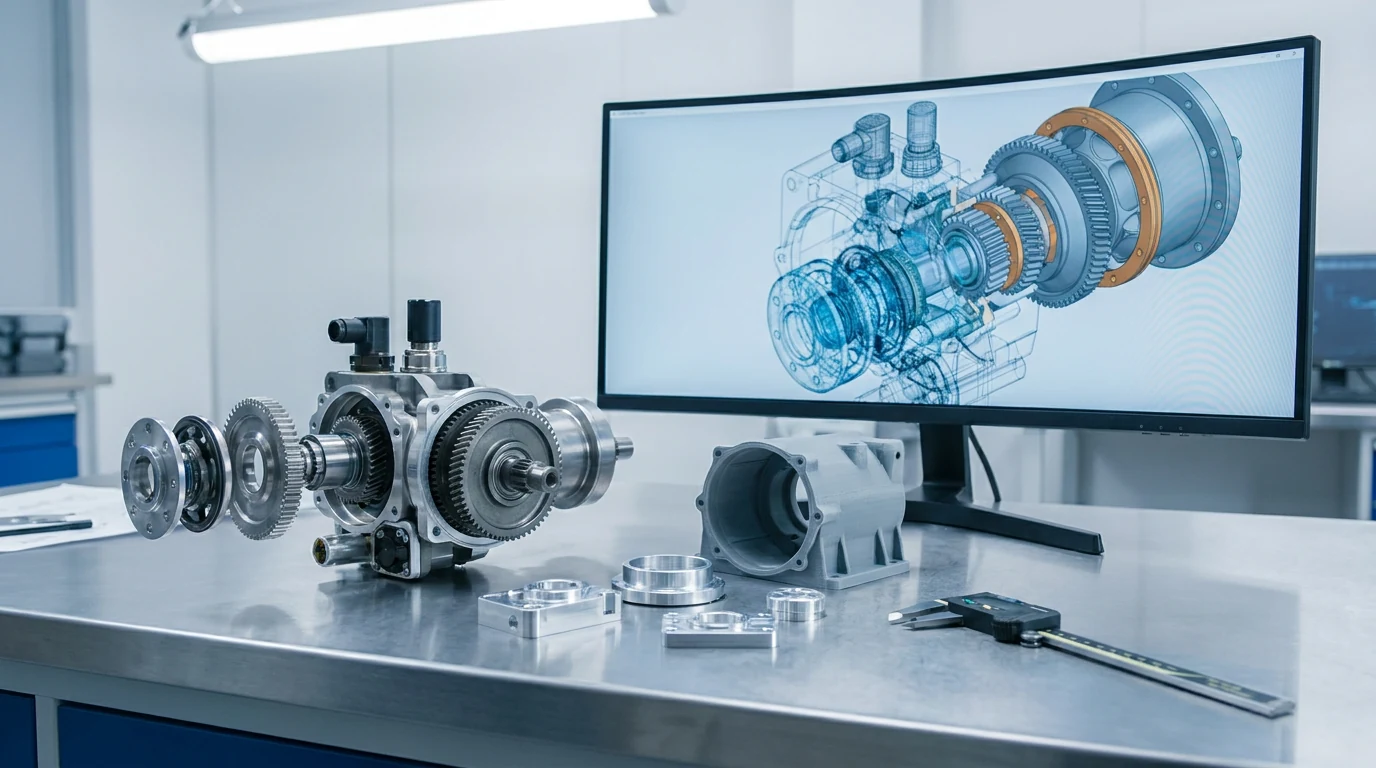
The fastest design review is the one where everyone is looking at the same shape. A bracket, a housing, a fixture: on a whiteboard they are all arguable. In 3D, the argument usually ends in thirty seconds — the boss radius is obviously too tight, the grip is obviously too fat, the vent pattern obviously works.

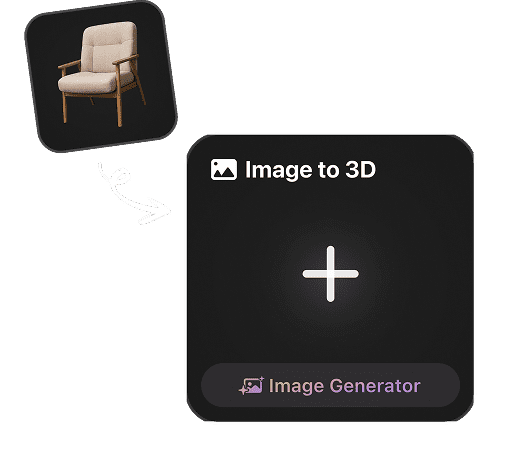
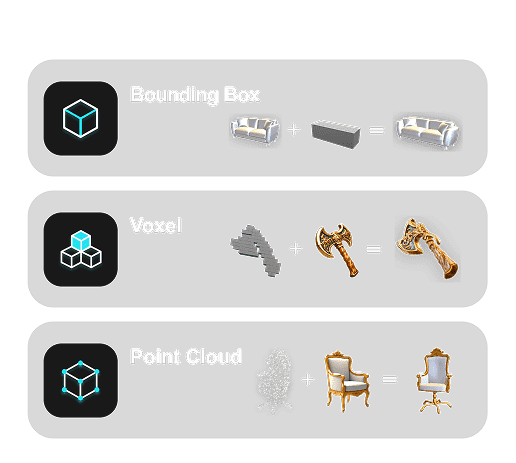
Three steps from the thing on your bench to a file in your slicer or review deck.


Four places engineering teams slot generated meshes into an existing process. None of them touch your CAD seat.
Put three enclosure directions on a turntable before anyone spends a CAD afternoon. Kill the weak ones while they are still cheap.
A GLB in the browser answers "how big is it, really?" in seconds. Sketch the missing piece from a text prompt so the assembly story stays complete.
Watertight remesh, STL export, overnight print. Wrap a hand around the grip and set the part on the fixture before tooling conversations start.
Re-texture the same mesh for a clean studio look or a worn-in-service finish, then render exploded views and hero shots for documentation.
Straight answers on formats, accuracy, printing, and where CAD still does the real work.
Criadores usam a Hyper3D para transformar referências e prompts em modelos 3D editáveis e prontos para exportação.
AI 3D just hit a new threshold. Rodin Gen-2.5: Geometry in ~4s, full model in ~5s, 10M+ polygons, clean structure, production-ready outputs. This is the moment AI 3D becomes an actual pipeline tool.
Tested Rodin Gen-2.5 from Hyper 3D. Cleaner meshes, sharper surface detail, stronger multi-angle coherence. The results feel much closer to something you’d actually keep iterating on inside a real workflow.
Rodin Gen 2.5 is a game-changer. 10M+ polygons, 3D-native textures, and seriously good results on complex high-poly models. Production-ready assets just got a lot closer.
Free to try. First mesh in minutes — STL, OBJ, and GLB export once it survives the review.