Mühendislik konsept parçaları için
AI 3D model üretici

Parça fotoğrafı, eskiz veya prompt dakikalar içinde dokulu mesh olur. Konsepti görselleştirin, inceleyin, test baskısı alın — CAD saatleri başlamadan.

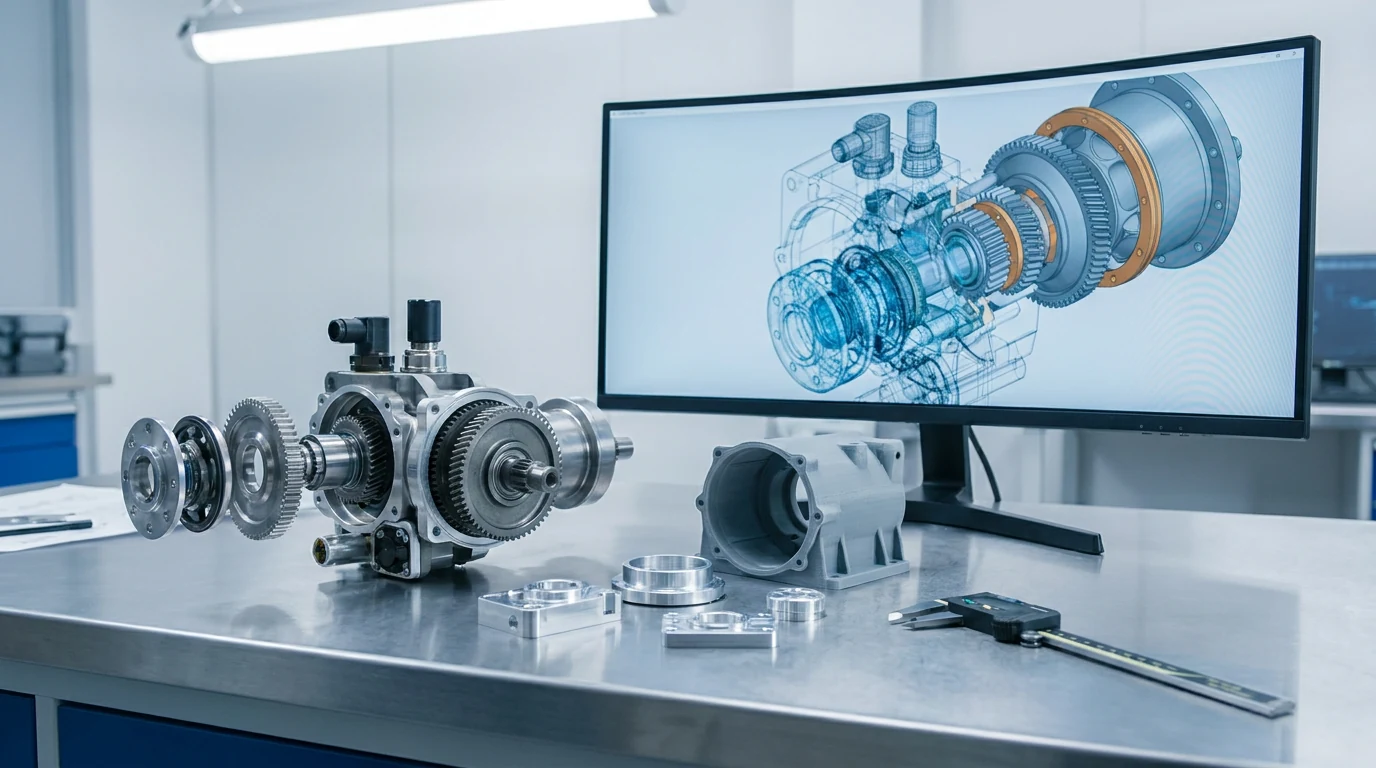
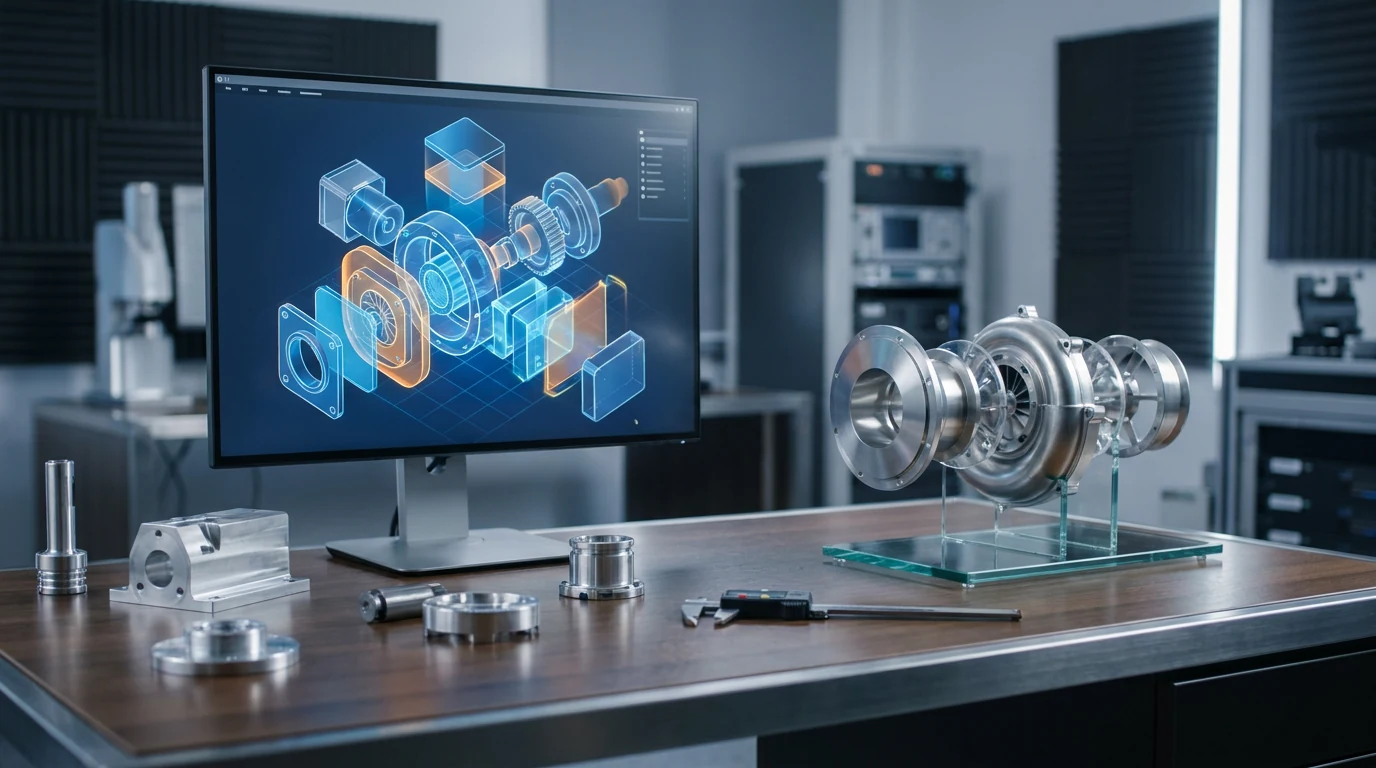
AI 3D model generator for engineering — textured mesh of a machined part concept on a dark turntable

Önce spesifikasyon

Engineers read the datasheet before the demo. Same rule here: what the generator outputs, which formats it writes, and exactly where its limits sit.

Output: textured polygon mesh

Every generation is a polygon mesh with PBR maps — base color, metallic, roughness, normal. Anodized aluminum reads as anodized aluminum on the turntable, not as gray plastic.

OBJ / FBX — into your DCC

Import into Blender or 3ds Max for exploded views, renders, and manual figures. The mesh doubles as an underlay while the production part gets modeled properly in CAD.

STL — watertight for the slicer

Run the watertight remesh before export and the STL loads straight into Cura or PrusaSlicer. Scale to nominal size in the slicer, then print the fit check overnight.

GLB — reviews in the browser

Geometry and materials in one file. Drop it into a web viewer or a slide, and reviewers orbit the part instead of decoding six screenshots of it.

USDZ — AR on the bench

Open the file on an iPad and stand the concept on the bench or machine it will bolt to. A thirty-second AR look settles most size-and-placement debates.

Not STEP. Not a feature tree.

You get a mesh, not parametric CAD — no sketches, constraints, or tolerances. It covers the concept and visualization work in front of SolidWorks; it does not replace it.

Önce konsept, sonra CAD

The fastest design review is the one where everyone is looking at the same shape. A bracket, a housing, a fixture: on a whiteboard they are all arguable. In 3D, the argument usually ends in thirty seconds — the boss radius is obviously too tight, the grip is obviously too fat, the vent pattern obviously works.

How image to 3D works

Parça fotoğrafından test baskısına

Three steps from the thing on your bench to a file in your slicer or review deck.

  1. Step 1 — Capture
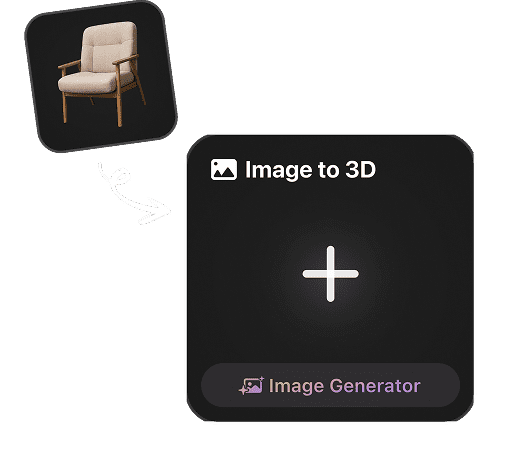
    Uploading a machine part photo to the AI 3D model generator for engineering

    Photograph or describe the part

    .jpg / .png photo · sketch · text prompt
  2. Step 2 — Generate
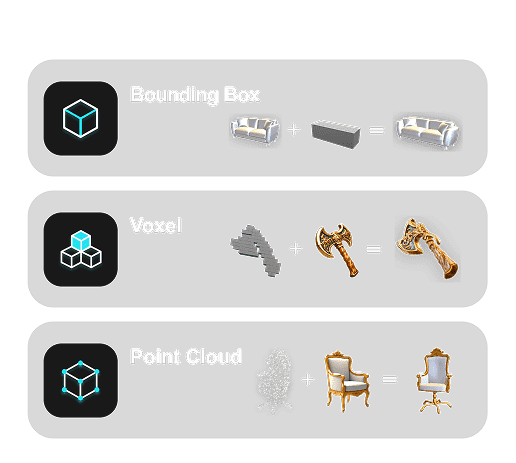
    AI generating a textured 3D mesh of a mechanical part for concept visualization

    Get a textured mesh draft

    polygon mesh · PBR maps · minutes per part
  3. Step 3 — Export
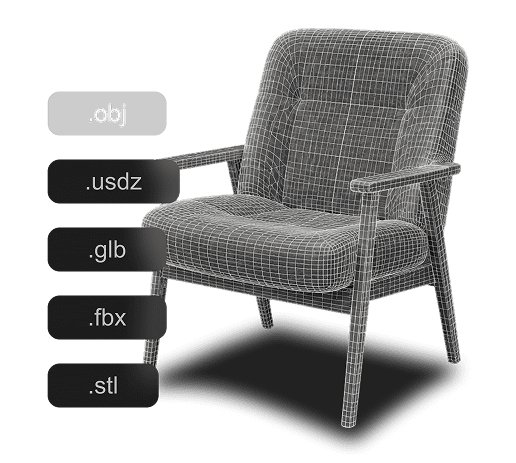
    Exporting the generated part mesh as STL for prototype printing or GLB for design review

    Remesh watertight, hand it off

    STL to slicer · OBJ / FBX to DCC · GLB to review

Mesh'in işe yaradığı yerler

Four places engineering teams slot generated meshes into an existing process. None of them touch your CAD seat.

Concept & trade studies

Concept & trade studies

Put three enclosure directions on a turntable before anyone spends a CAD afternoon. Kill the weak ones while they are still cheap.

Design reviews that end on time

Design reviews that end on time

A GLB in the browser answers "how big is it, really?" in seconds. Sketch the missing piece from a text prompt so the assembly story stays complete.

Check prints & ergonomics

Check prints & ergonomics

Watertight remesh, STL export, overnight print. Wrap a hand around the grip and set the part on the fixture before tooling conversations start.

Manuals, training, trade shows

Manuals, training, trade shows

Re-texture the same mesh for a clean studio look or a worn-in-service finish, then render exploded views and hero shots for documentation.

SSS: Mühendislik için AI 3D üretici

Straight answers on formats, accuracy, printing, and where CAD still does the real work.

Do I get STEP, IGES, or a feature tree?

No. The output is a polygon mesh — OBJ, FBX, GLB, USDZ, or STL — with PBR textures. There are no parametric features, sketches, or constraints, so treat it as concept geometry, not manufacturing data.

How dimensionally accurate is the mesh?

Proportions follow your reference, but nothing is certified to a drawing. Set the nominal size in your slicer or DCC before use, and never pull a tolerance off the mesh — that work stays in CAD.

Can I 3D print the result?

Yes. Run the watertight remesh, export STL or OBJ, slice, print. That covers fit checks, ergonomic mockups, and desk-side concept props — not load-rated production parts.

What reference photos work best for machine parts?

One part per frame, plain background, even light. Straight-on views beat dramatic angles, and a second view helps for parts with pockets or hidden geometry.

Can I import the mesh into SolidWorks or Fusion 360?

As a mesh body, yes — both import OBJ and STL. Use it as a visual underlay or packaging reference while you model the real part; mesh-to-solid conversion exists but is manual work.

Text prompt or photo — which should I start with?

Photo, if the part exists — image to 3D is the shortest path to a matching mesh. If the part only exists in your head, a precise text prompt gets you a first volume the team can react to.

How do I keep a review file light enough for the browser?

Export GLB and keep the polycount modest. If a generation comes out heavy, reduce and clean it in the OmniCraft Mesh Editor before it goes into a web viewer or slide deck.

Can I use generated models in commercial work?

Yes — proposals, manuals, pitch decks, and marketing renders are typical uses. Check your plan terms and the rights on your source images before anything ships client-facing.

Gerçek 3D varlık üretenlerin güvendiği araç

Creator’lar Hyper3D ile referansları ve promptları düzenlenebilir, dışa aktarılabilir 3D modellere dönüştürür.

AI 3D just hit a new threshold. Rodin Gen-2.5: Geometry in ~4s, full model in ~5s, 10M+ polygons, clean structure, production-ready outputs. This is the moment AI 3D becomes an actual pipeline tool.

Sabir Hussain

Sabir Hussain

AI & Tech Enthusiast

Tested Rodin Gen-2.5 from Hyper 3D. Cleaner meshes, sharper surface detail, stronger multi-angle coherence. The results feel much closer to something you’d actually keep iterating on inside a real workflow.

BubbleBrain

BubbleBrain

AI Enthusiast

Rodin Gen 2.5 is a game-changer. 10M+ polygons, 3D-native textures, and seriously good results on complex high-poly models. Production-ready assets just got a lot closer.

Lagerskoy

Lagerskoy

Hunter & Builder

Bir sonraki konsepti turntable'a koyun

Free to try. First mesh in minutes — STL, OBJ, and GLB export once it survives the review.