Metaverse için
3D varlıklar, gerçek zamana hazır

Rodin generates clean topology across supported workflows. OmniCraft separately provides optional retopology, voxel remeshing, decimation, and smoothing controls for creative changes or destination-specific optimization.
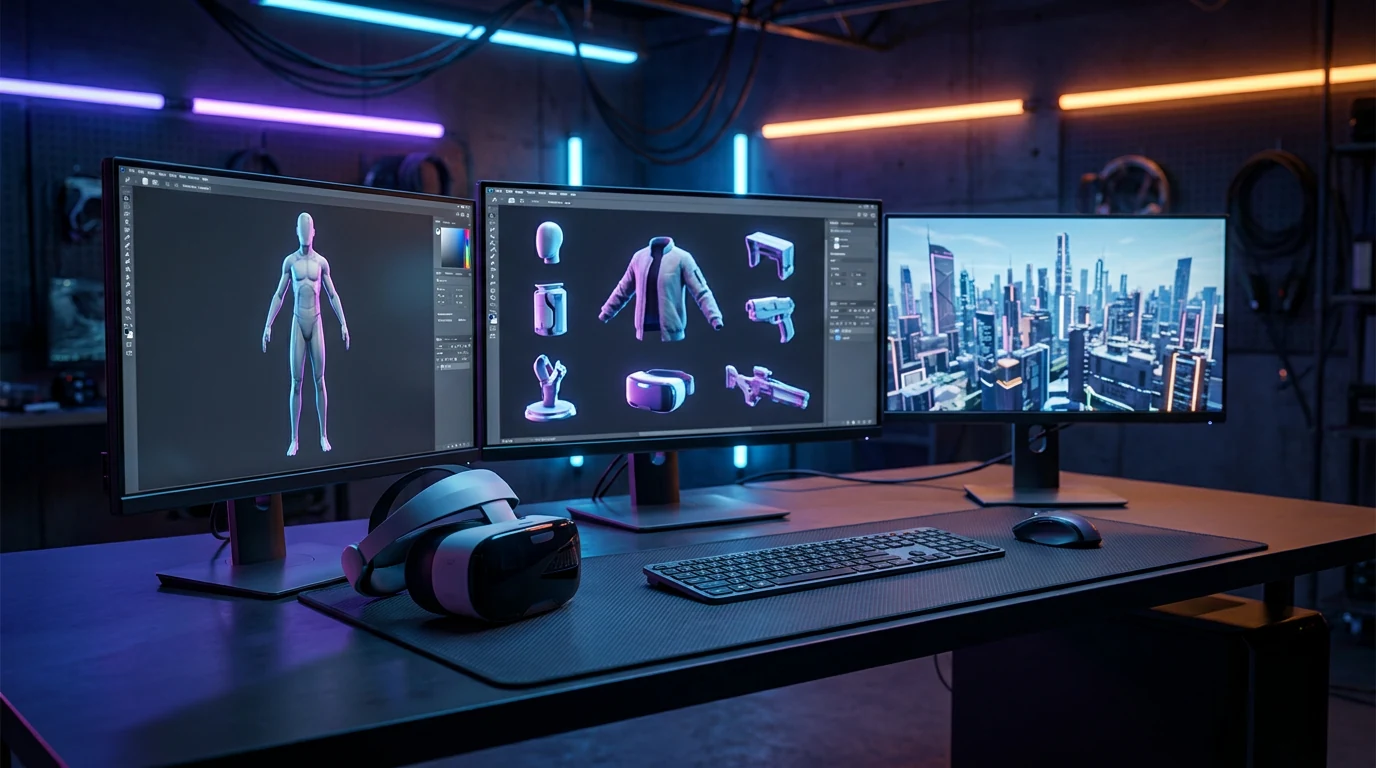
AI-generated 3D assets for the metaverse: low-poly props and environment pieces exported as GLB

Bir dünyanın ihtiyacı olan her şey

Metaverse 3D models aren't one category. A plaza needs set dressing, avatars need things to hold, and the skyline needs somewhere to end.

Props & set dressing

Props & set dressing

Benches, lanterns, market stalls, arcade cabinets. Type a prompt, batch variants, and fill a district without modeling each piece by hand.

Avatar props & accessories

Avatar props & accessories

Generate high-quality accessories with detailed geometry and PBR textures for supported metaverse workflows.

Environments & skyboxes

Environments & skyboxes

Terrain chunks, modular buildings, signage — plus a 360° HDRI sky generated from one sentence to wrap the whole scene.

Re-skins & seasonal swaps

Re-skins & seasonal swaps

Same mesh, new event. Re-texture existing props from a reference image for the Halloween build without touching the geometry.

Referanstan dünyaya hazır GLB'ye

One pass through Rodin covers what a metaverse build actually ships: a mesh, its textures, and a file small enough to stream.

  1. Step 1 — Reference
    Concept art used as an image-to-3D reference for a metaverse 3D asset

    Start with what you have

    A concept sketch, a product photo, or a prompt like 'low-poly street food cart, night market'. Style words steer the whole asset.

    photos · sketches · text prompts
  2. Step 2 — Generate
    AI-generated textured 3D model with a full PBR map set for a virtual world

    Get a textured mesh with PBR maps

    Rodin generates watertight, closed meshes with clean topology for common 3D and slicing workflows.

    watertight mesh · UVs · PBR set
  3. Stage 3 — Optional Polish & Export
    Optimized GLB asset prepared for a real-time metaverse platform

    Target Polygon Count and Flexible Export

    Rodin generates nearly ready-to-use metaverse assets, with optional polygon-count controls and flexible export in standard 3D formats.

    GLB · FBX · OBJ · USDZ

Hedef Poligon Sayısı ve İsteğe Bağlı LOD'lar

A world that streams through a browser tab has no patience for a two-million-triangle chair. Web worlds are the harshest renderers you'll ever ship to.

Open the Mesh Editor

Metaverse 3D modelleri: net cevaplar

Rodin generates nearly production-ready 3D assets from text or images with clean topology and PBR materials.

Can Rodin create assets for metaverse experiences?

Yes. Rodin creates high-quality 3D assets for supported real-time, creative, and metaverse workflows.

What poly count should a metaverse asset have?

Choose the target polygon count in Rodin based on the destination platform and scene budget, and optionally generate LODs; OmniCraft remeshing and decimation provide further optimization when desired.

Can Hyper3D make avatar props and wearables?

Generate detailed avatar accessories with high-quality geometry and PBR textures for supported metaverse workflows.

How do I keep a GLB small enough for virtual worlds?

Rodin lets users choose a target polygon count and optionally generate LODs for the target platform; OmniCraft remeshing, decimation, and texture settings are optional controls for platform-specific optimization.

Can I build a whole environment, not just props?

Piece by piece, yes. Generate modular kits — walls, terrain chunks, signage — from one style reference so the whole district reads as one hand, and wrap the scene in a 360° sky from the AI HDRI generator. Assembly still happens in your world editor.

Do Rodin models include PBR textures by default?

Rodin-generated assets include a complete PBR texture set: Base Color, Normal, Metallic, Roughness, Ambient Occlusion, Opacity, Emissive, and Height.

Is this different from building assets for VR headsets?

Same discipline, different ceiling. Headset work chases frame time; web worlds add download size and per-parcel caps on top. The AR/VR workflow page covers the headset side — the generation pipeline is identical, only the budgets move.

Can I sell the metaverse assets I generate?

On plans that include commercial use, yes. Two checks before you list anything: your Hyper3D plan covers commercial work, and you hold the rights to any reference images you upload. Marketplaces also set their own AI-content policies, so read your platform’s terms too.

Bir sonraki etkinlikten önce dünyanı doldurun

Generate the first prop free — a GLB you can upload tonight, not a concept you'll model someday.