AI İzometrik 3D Model Oluşturucu

Generate buildings, props, and tiles built for the isometric camera: compact footprints, readable rooflines, consistent scale. Export GLB or render to sprites.
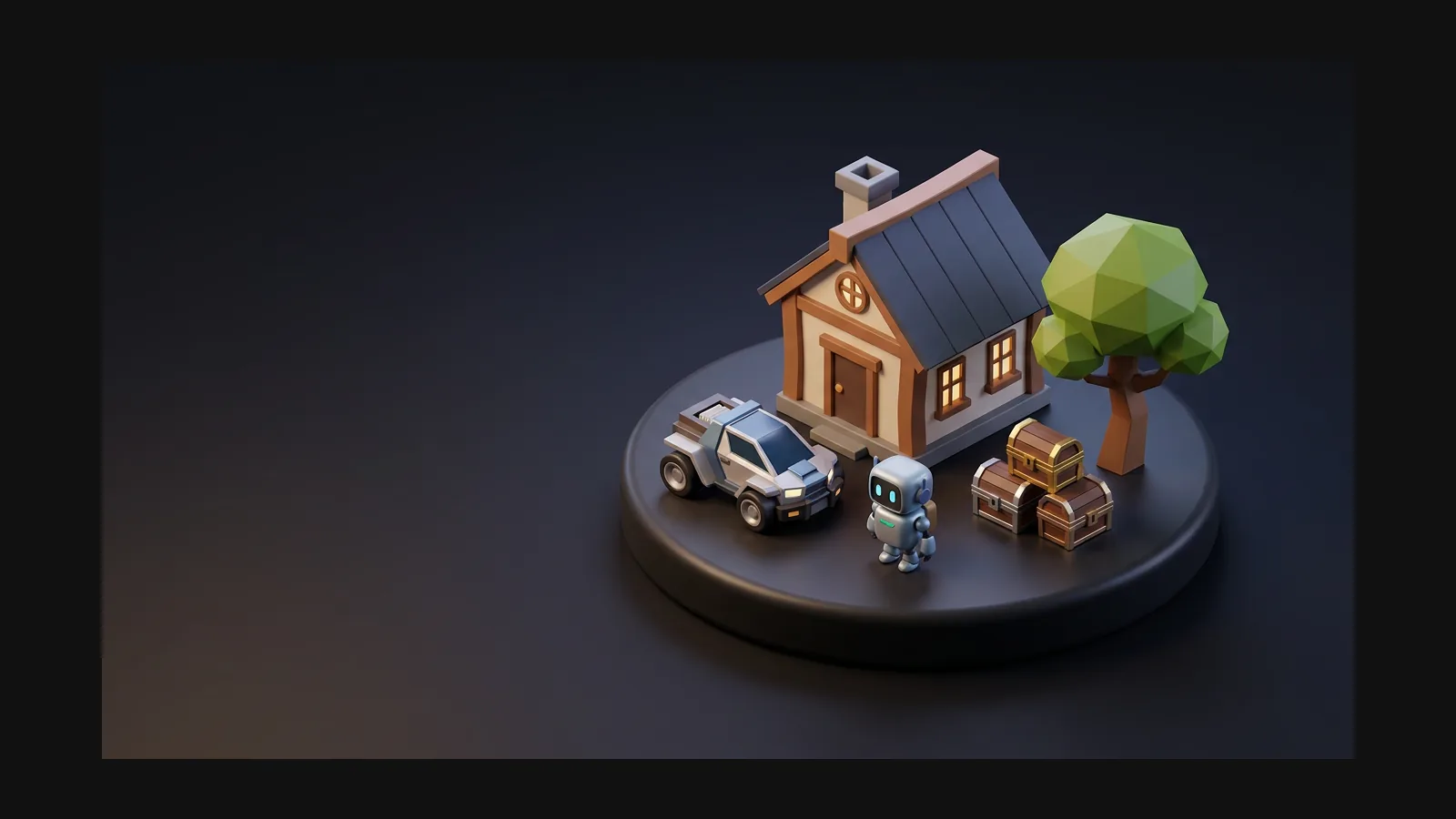
İzometrik 3D model generator hero image

İzometrik varlığı işler kılan nedir

Four habits from city-builder and strategy art teams — camera, footprint, visible faces, scale — each one promptable and checkable before export.

Stil, kameranın kendisidir

Stil, kameranın kendisidir

Isometric is a viewpoint, not a material: an orthographic camera looking down at roughly 30 degrees, no perspective convergence. Any well-built 3D model becomes isometric the moment that camera points at it — which is exactly why generating real 3D beats drawing each angle by hand.

Karoya uygun tabanlar

Karoya uygun tabanlar

Game tiles live on a grid, so the model's base must respect it. Prompt for 'compact square footprint' or 'fits a single tile', and keep overhangs — awnings, roof eaves — inside the cell or deliberately one cell deep. That discipline is what makes a set snap together in a tilemap.

Görünen üç yüz için tasarla

Görünen üç yüz için tasarla

An isometric camera only ever shows the top and two sides. Put the story there: chimneys, skylights, rooftop clutter, signage on the two visible walls. Detail on the hidden faces is wasted budget — a habit isometric artists know and prompts should copy.

Tüm sette tek ölçek

Tüm sette tek ölçek

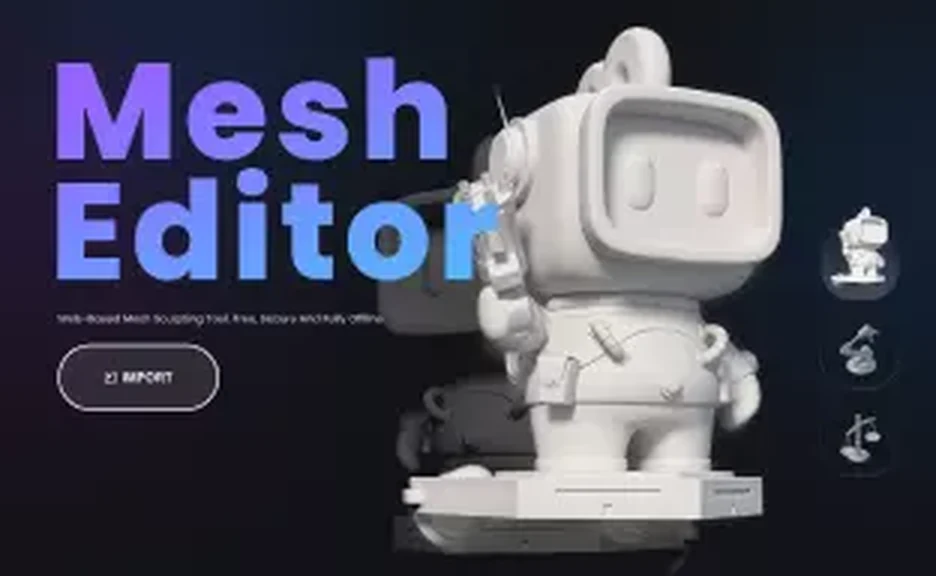
A city block falls apart if the bakery door is taller than the tavern. After generating, normalize sizes in the OmniCraft Mesh Editor — check each building against a common door-height reference before export, the same way pixel artists keep a hero sprite on the canvas for scale.

İzometrik bir karo seti kur

From one prompt to a district: generate, normalize, then either keep it 3D or render it down to sprites.

  1. Step 1 — Generate the anchor
    Grid of generated 3D building models for an isometric tile set

    One building sets the rules

    Start with the prompt "isometric corner bakery, compact square footprint, warm brick and cream palette, readable roofline, designed for a 30-degree orthographic camera". This first asset defines palette and proportions for everything after it.

    anchor prompt · palette lock
  2. Step 2 — Extend the set
    Generated isometric building model opened in the OmniCraft Mesh Editor for scale checks

    Seed siblings from the anchor

    Use the anchor's screenshot as the image reference and change only the subject: tavern, well, market stall, watchtower. Then normalize scale in the Mesh Editor so every door lines up across the district.

    image reference · scale normalize
  3. Step 3 — Ship 3D or sprites
    Textured 3D model viewed in a real-time engine with an orthographic isometric camera setup

    Two endings, both standard

    True-3D route: export GLB or FBX and set an orthographic camera at 30 degrees in Unity, Godot, or Unreal. Sprite route: render each model at the classic 2:1 dimetric angle in Blender and feed the PNGs to your 2D tilemap.

    GLB · FBX · 2:1 sprite renders

Cetvelsiz izometrik illüstrasyon

Tech-blog headers, product cutaways, explainer scenes: generate the room or device once, orbit to the exact angle, and render. Change the layout next week without redrawing a single line — the 3D scene is the source file.

Görselden 3D'yi dene

İzometrik 3D model oluşturucu SSS

Camera angles, tile consistency, sprite rendering, and export formats — answered the way a strategy-game art lead would.

What is an isometric 3D model, exactly?

Strictly speaking, isometric is a projection — a camera convention, not a property of the mesh. In practice, "isometric 3D model" means an asset designed to look right under that camera: compact footprint, detail on the visible faces, proportions that read at a steep angle. Rodin generates the asset; your renderer supplies the projection.

True isometric or 2:1 dimetric — does it matter for my game?

It matters for pixel alignment, not for the model. True isometric uses equal 120-degree axes (~35.26° camera pitch); most 2D games actually use 2:1 dimetric (~26.57°) because tile edges land on whole pixels. The good news: the same 3D model serves both — it's just a camera angle you set at render time.

Does Rodin render the isometric view for me?

Rodin generates the 3D model; the fixed-angle render is a one-time setup in your tool of choice. In Blender: orthographic camera, rotation X 60°, Z 45°, done. In Unity or Godot: an orthographic camera at the matching pitch. Export GLB to keep it 3D, or batch-render PNGs if your pipeline wants sprites.

How do I keep a whole tile set visually consistent?

Three locks. Palette: reuse the anchor asset's screenshot as image reference for every sibling. Scale: normalize against a door-height reference in the Mesh Editor before export. Footprint: keep "compact square footprint" in every prompt. Teams that skip the second lock always find out in the tilemap.

Which style pairs best with isometric?

Low poly is the classic partner — clean facets stay readable at steep angles and small on-screen sizes, and the light polycount lets a city of tiles run smoothly. Voxel is the cozier cousin for builder games. Painterly or photoreal styles work too, but need more texture resolution per tile.

What do people build with isometric assets besides games?

Isometric illustration is an industry of its own: SaaS landing-page scenes, architecture and real-estate cutaways, infographic maps, dashboard empty-states. Generating the underlying 3D means the client's "can we see it from the other corner?" costs a camera move, not a redraw. See game development for the game-side pipeline.

Which formats should I export for isometric work?

For true-3D games: FBX into Unity or Unreal, GLB into Godot or a web viewer. For the sprite route: OBJ into Blender, render PNGs from the fixed camera. For an AR tabletop preview of your city block, USDZ on an iPad is a surprisingly effective pitch tool.

Gerçek 3D varlıklar üretenlerin güvendiği

Yaratıcılar Hyper3D ile İzometrik referansları ve promptları düzenlenebilir 3D modellere dönüştürür.

AI 3D just hit a new threshold. Rodin Gen-2.5: Geometry in ~4s, full model in ~5s, 10M+ polygons, clean structure, production-ready outputs. This is the moment AI 3D becomes an actual pipeline tool.

Sabir Hussain

Sabir Hussain

AI & Tech Enthusiast

Tested Rodin Gen-2.5 from Hyper 3D. Cleaner meshes, sharper surface detail, stronger multi-angle coherence. The results feel much closer to something you’d actually keep iterating on inside a real workflow.

BubbleBrain

BubbleBrain

AI Enthusiast

Rodin Gen 2.5 is a game-changer. 10M+ polygons, 3D-native textures, and seriously good results on complex high-poly models. Production-ready assets just got a lot closer.

Lagerskoy

Lagerskoy

Hunter & Builder

İzometrik setine bugün başla

Generate the anchor building, seed the rest of the district from it, and have a coherent tile set before the week is out.