




Make your next creation.
Turn your ideas into 3D assets. Start creating with Hyper3D.
Create a complete, self-contained single HTML file (no external libraries like Three.js) that implements a real-time geodesic raytracer for a Schwarzschild black hole inspired by Gargantua. Use raw WebGL2 with GLSL ES 3.00 in a single fragment shader. Implement accurate physics: null geodesic integration with 4th-order Runge-Kutta solver, event horizon, photon sphere, accretion disk with proper rendering, gravitational lensing, Doppler beaming, and gravitational redshift effects. Target stable 60 FPS performance. Include mouse-controlled camera orbiting/zooming, and a cyberpunk-style control panel with sliders for parameters (mass, spin, disk density, view angle, etc.). Add subtle particle effects for matter falling in and dynamic lighting/shadows. The output must be 100% complete, immediately runnable in a modern browser, with no black screen, NaNs, errors, or missing features. Prioritize numerical correctness, boundary handling, solver discipline, and physical accuracy above all. Verify and comment key physics equations in the code. Make it visually stunning and interactive like a premium physics demo/game.
Download unavailable. Open the original video to save it.
Create a complete, self-contained single HTML file (no external libraries like Three.js) that implements a real-time geodesic raytracer for a Schwarzschild black hole inspired by Gargantua. Use raw WebGL2 with GLSL ES 3.00 in a single fragment shader. Implement accurate physics: null geodesic integration with 4th-order Runge-Kutta solver, event horizon, photon sphere, accretion disk with proper rendering, gravitational lensing, Doppler beaming, and gravitational redshift effects. Target stable 60 FPS performance. Include mouse-controlled camera orbiting/zooming, and a cyberpunk-style control panel with sliders for parameters (mass, spin, disk density, view angle, etc.). Add subtle particle effects for matter falling in and dynamic lighting/shadows. The output must be 100% complete, immediately runnable in a modern browser, with no black screen, NaNs, errors, or missing features. Prioritize numerical correctness, boundary handling, solver discipline, and physical accuracy above all. Verify and comment key physics equations in the code. Make it visually stunning and interactive like a premium physics demo/game.
Turn your ideas into 3D assets. Start creating with Hyper3D.
Follow us


State which objects must remain separate, named and editable; otherwise a visually convincing shell may still be unusable.
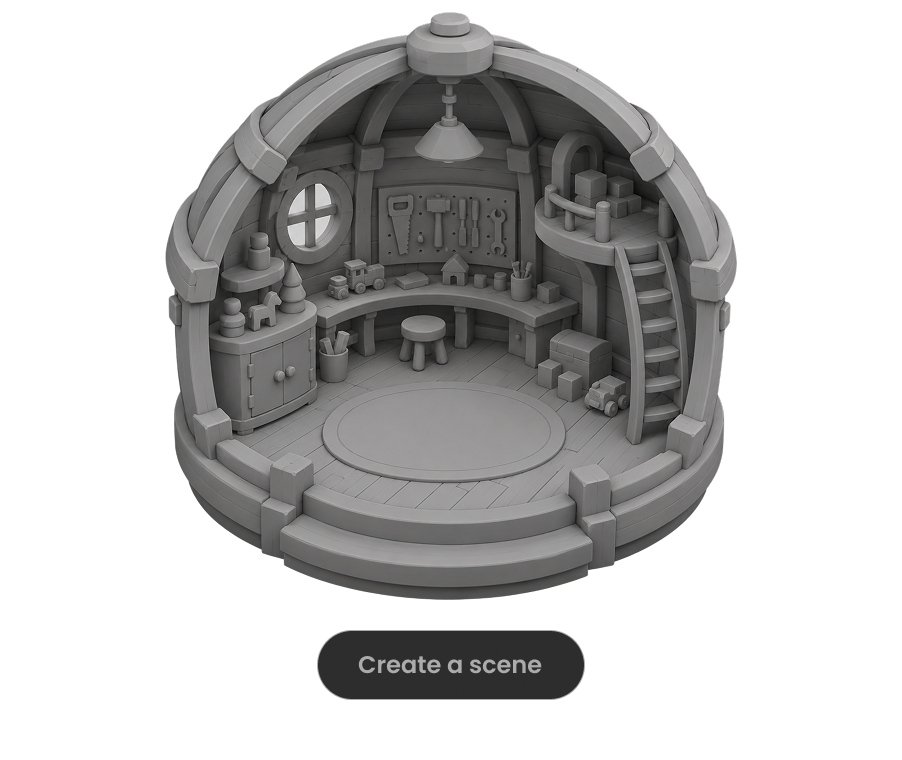
Ask the model to run the scene, inspect visible failures and repeat until concrete frame-rate, interaction and layout checks pass.

For large worlds, split the work into districts, assemblies or milestones and approve each section before expanding scope.

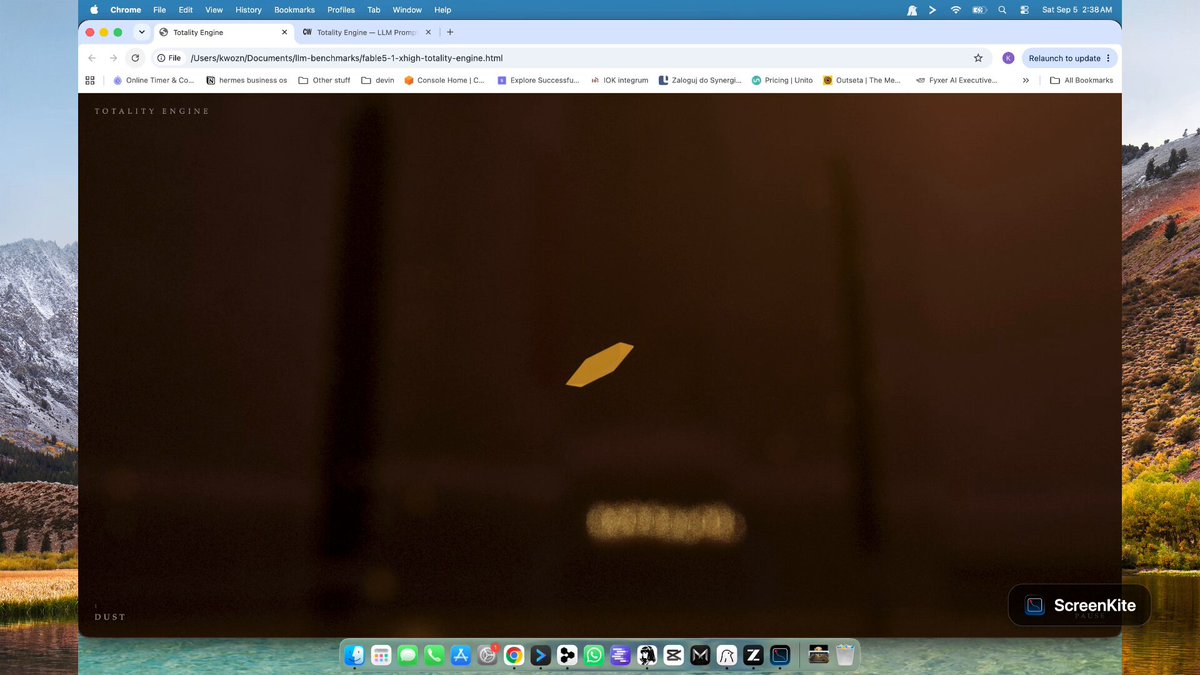
A complete Three.js/WebGL prompt for a 32-second looping film inside a flooded gothic cathedral, with a monumental astronomical clock, directed camera beats, procedural water, glass planets and eclipse lighting. Chris W published an Astra run and a comparison with other models.

The original post showcases a 3D model and web experience of Beijing’s Temple of Heaven Hall of Prayer for Good Harvest, created with GPT-6 Astra and Three.js. The author later shared the complete Chinese prompt used to create this type of project.
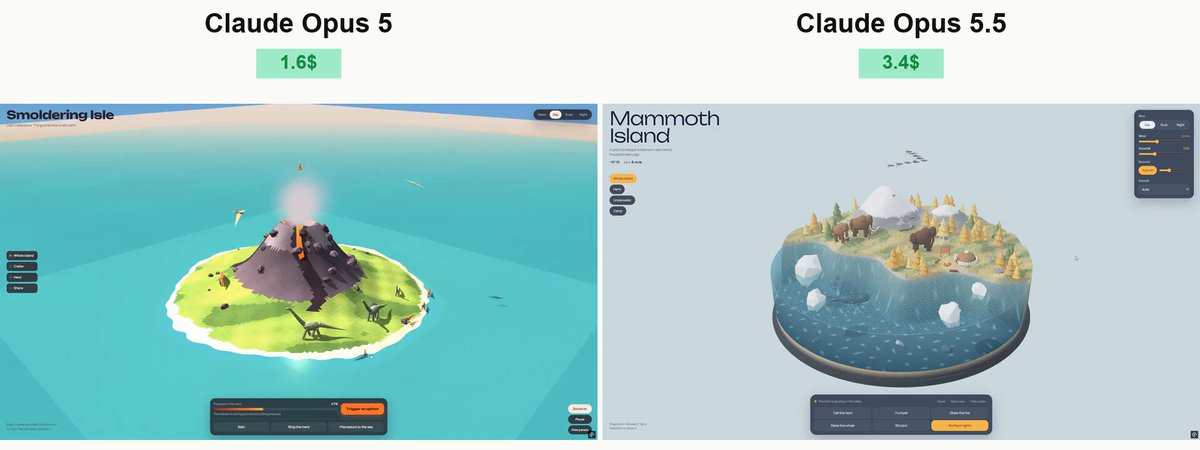
Prompt shared by Vib3Coded in a thread describing their test of Claude Opus 5.5. It requests a standalone Three.js/WebGL interactive prehistoric island with an underwater cross-section, animated dinosaurs and marine life, environmental controls, audio, and browser testing.
