THE 3D PROMPT LIBRARY

Kimi K3 3D Prompts

Explore 3D projects made with Kimi K3, from models and scenes to interactive worlds. Preview each example, read the source and adapt its prompt for your next creation.

Featured results

Kimi K3 / 3D prompt examples

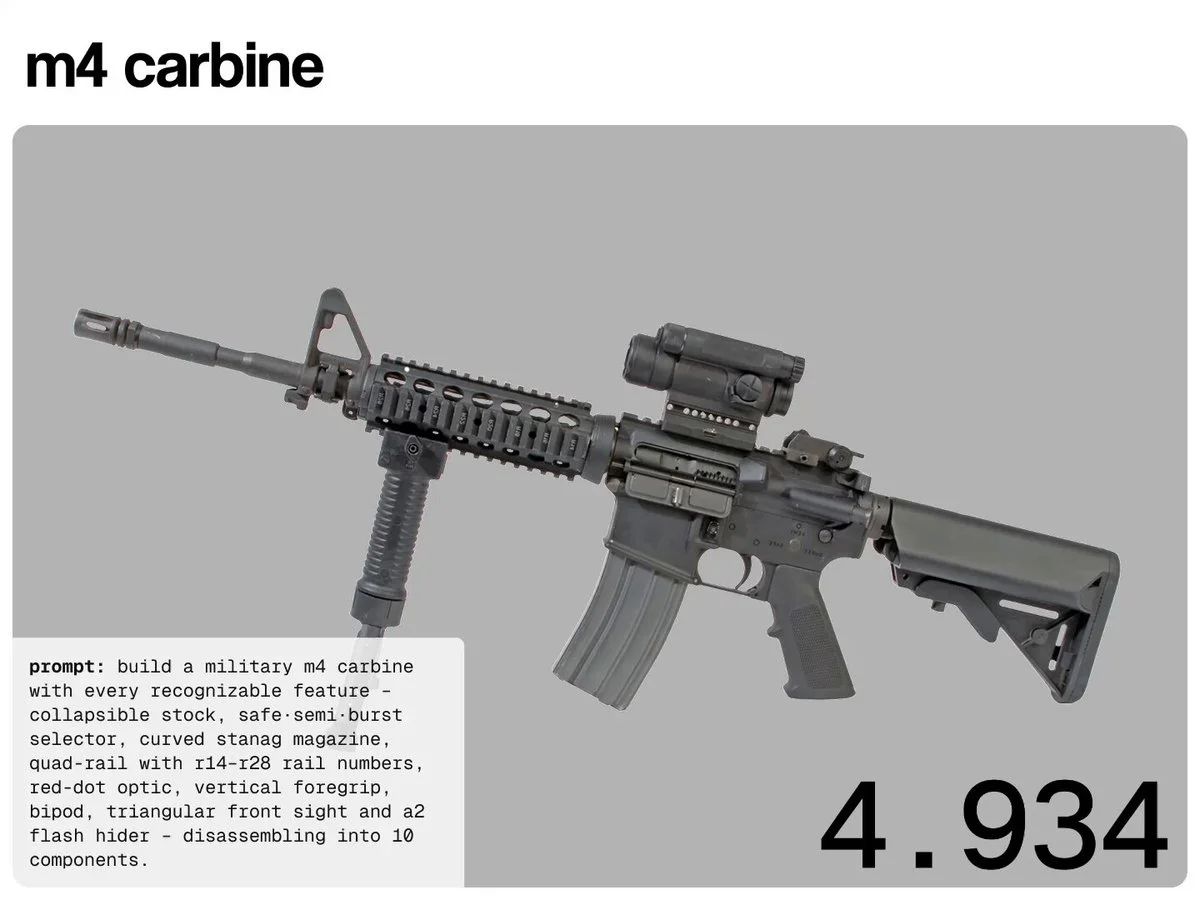
Three single-file HTML Three.js procedural gun prompts
Kimi K3

Three single-file HTML Three.js procedural gun prompts

our test – 3 prompts, single-file html, @threejs, fully procedural, no assets. each has a small fire button (web audio gunshot + muzzle flash + recoil + ejected brass) and a disassemble toggle that explodes the gun into labelled parts and rebuilds it: 1. 5.56 m4 carbine – collapsible stock, safe·semi·burst lower, quad-rail with r14–r28 panel numbers, aimpoint red-dot, vertical foregrip, folding bipod, a2 flash hider, breaks into 10 parts 2. glock 18c – select-fire machine pistol, ported 18c compensator slots, "glock 18c / austria 9x19" roll-marks, extended 33-round mag, field-strips into slide, ported barrel, recoil spring, frame, mag 3. steyr tmp – ribbed polymer housing, threaded barrel, integral forward vertical foregrip, canted translucent 30-round mag

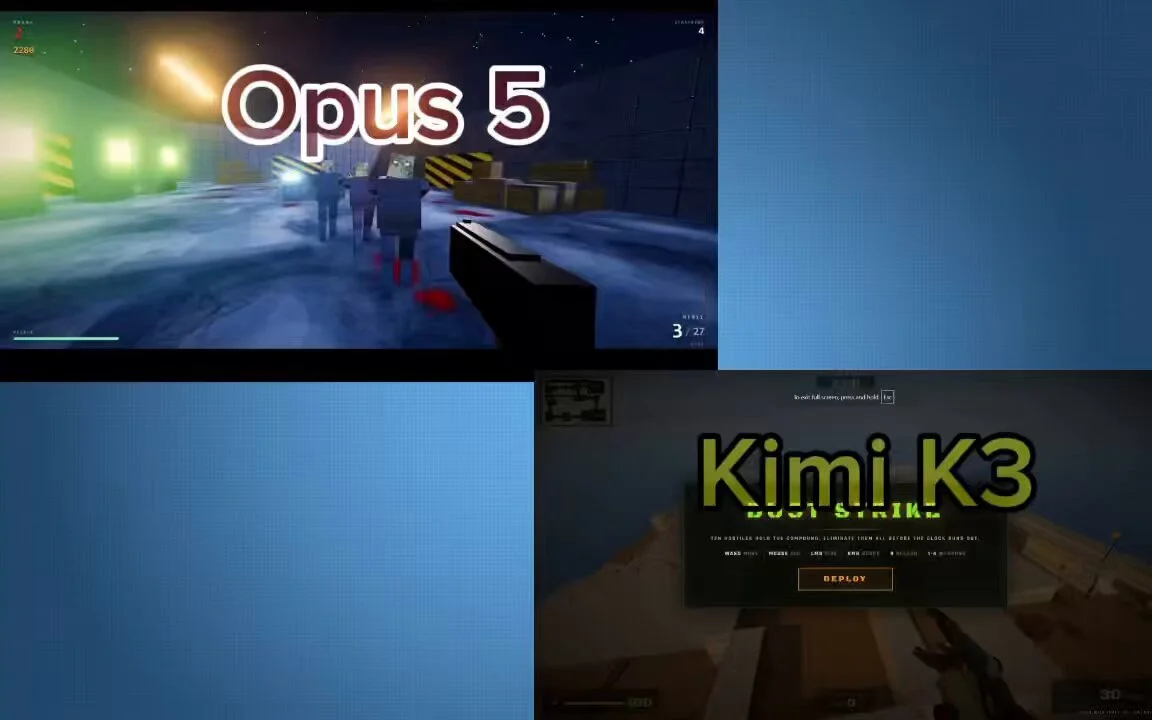
Browser Counter-Strike-Inspired Game Built with Kimi K3
Kimi K3

Browser Counter-Strike-Inspired Game Built with Kimi K3

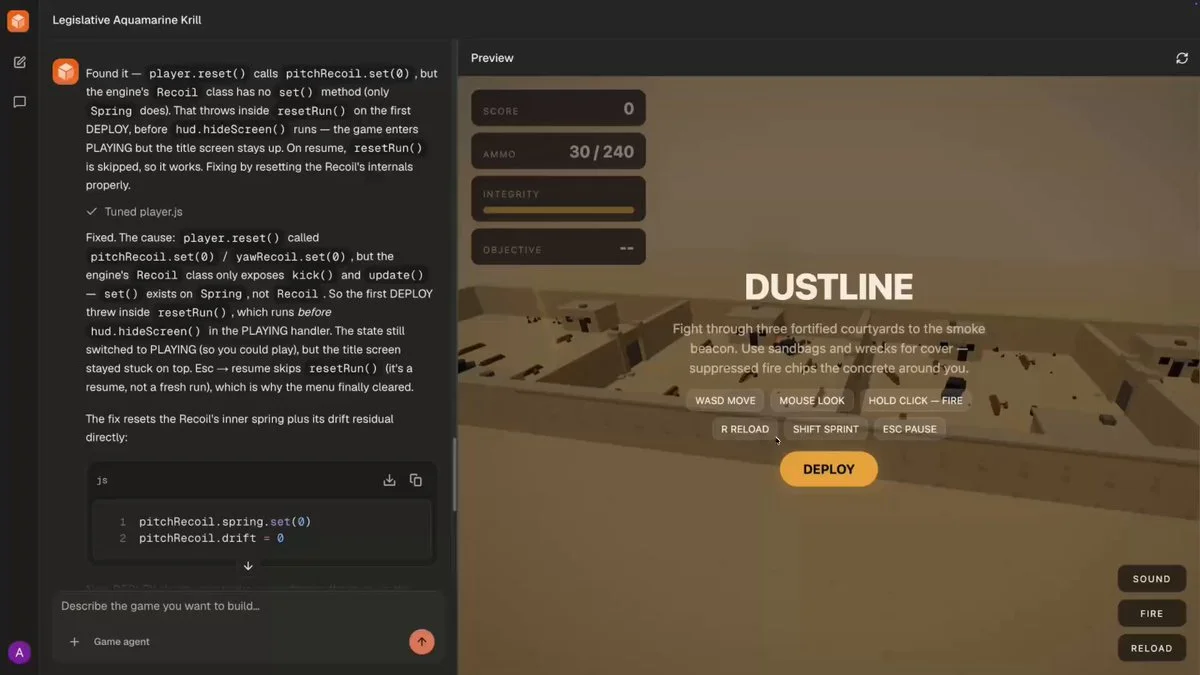
Built a Counter-Strike-inspired game in the browser with Kimi K3. One HTML file. Over 3,700 lines of code. No build step. It includes: 🔫 Dust2-inspired layout with tunnels, catwalk, and Long A 🎯 AK, AWP with scope, MP5, knife, and reload mechanics 🤖 10 AI bots that patrol, react to gunfire, and push your position 💥 Headshots, kill feed, and a 2-minute round system 🔊 Fully procedural audio with no sound files 🌐 Built with Three.js and PBR materials, running entirely in the browser

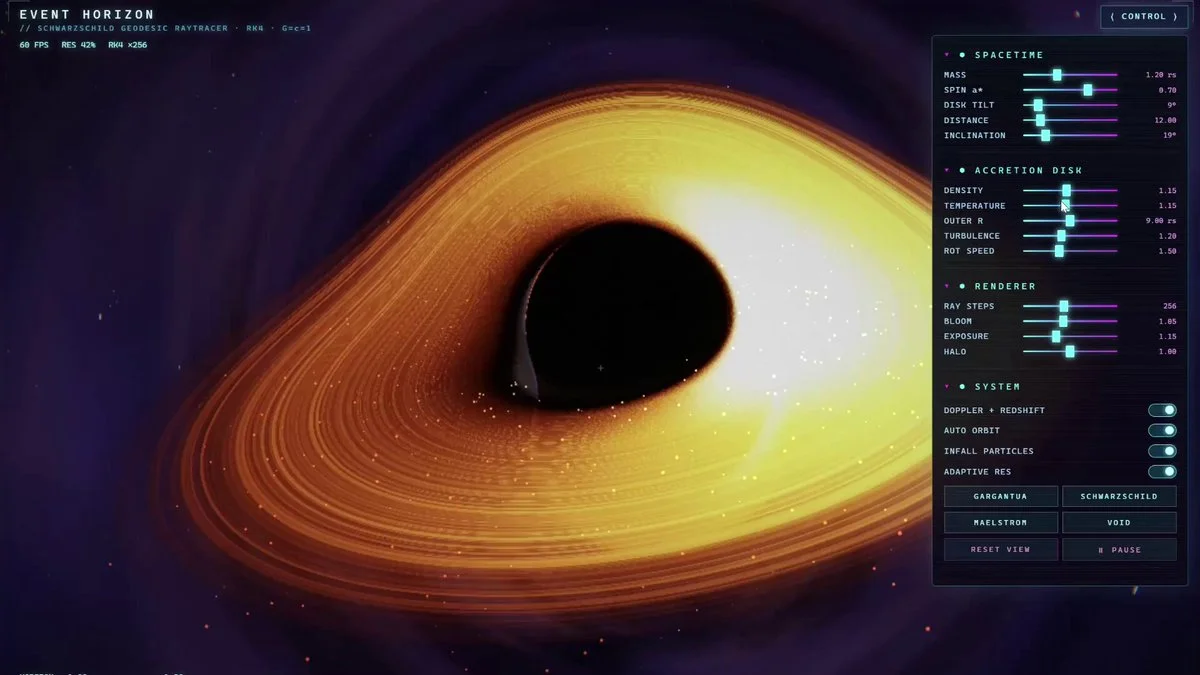
Single-file WebGL2 black hole raytracer prompt for Kimi K3
Kimi K3

Single-file WebGL2 black hole raytracer prompt for Kimi K3

Create a complete, self-contained single HTML file (no external libraries like Three.js) that implements a real-time geodesic raytracer for a Schwarzschild black hole inspired by Gargantua. Use raw WebGL2 with GLSL ES 3.00 in a single fragment shader. Implement accurate physics: null geodesic integration with 4th-order Runge-Kutta solver, event horizon, photon sphere, accretion disk with proper rendering, gravitational lensing, Doppler beaming, and gravitational redshift effects. Target stable 60 FPS performance. Include mouse-controlled camera orbiting/zooming, and a cyberpunk-style control panel with sliders for parameters (mass, spin, disk density, view angle, etc.). Add subtle particle effects for matter falling in and dynamic lighting/shadows. The output must be 100% complete, immediately runnable in a modern browser, with no black screen, NaNs, errors, or missing features. Prioritize numerical correctness, boundary handling, solver discipline, and physical accuracy above all. Verify and comment key physics equations in the code. Make it visually stunning and interactive like a premium physics demo/game.

Imagine It. Shape It.