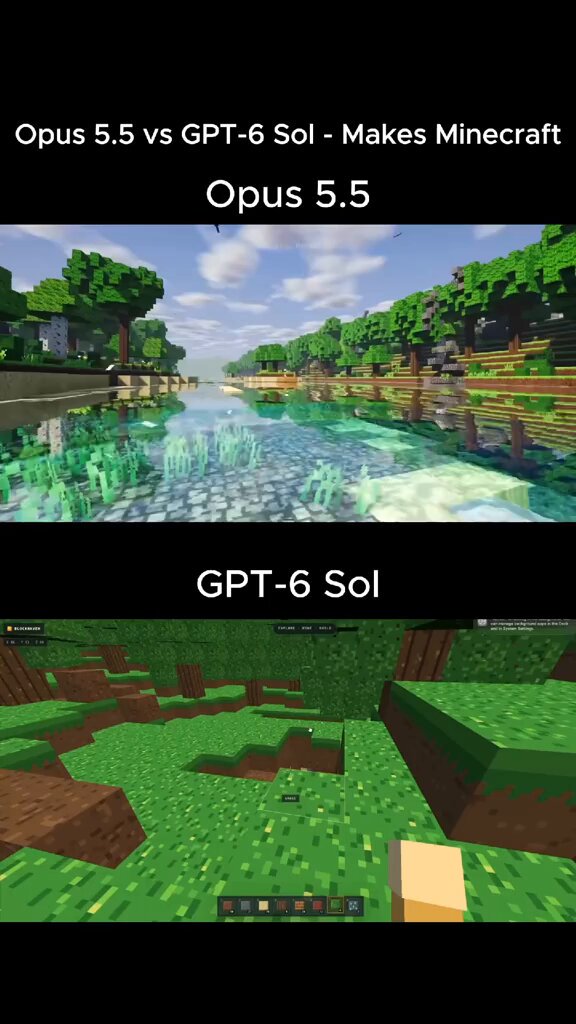
Minecraft Open World: Opus 5.5 vs. GPT-6 Sol
A side-by-side test using the same short prompt: Opus 5.5 produced explorable open water, a village, a beach and a working HUD, while GPT-6 Sol returned a cramped, dark cave.
Explore 3D projects made with Claude Opus 5.5, from models and scenes to interactive worlds. Preview each example, read the source and adapt its prompt for your next creation.
A side-by-side test using the same short prompt: Opus 5.5 produced explorable open water, a village, a beach and a working HUD, while GPT-6 Sol returned a cramped, dark cave.

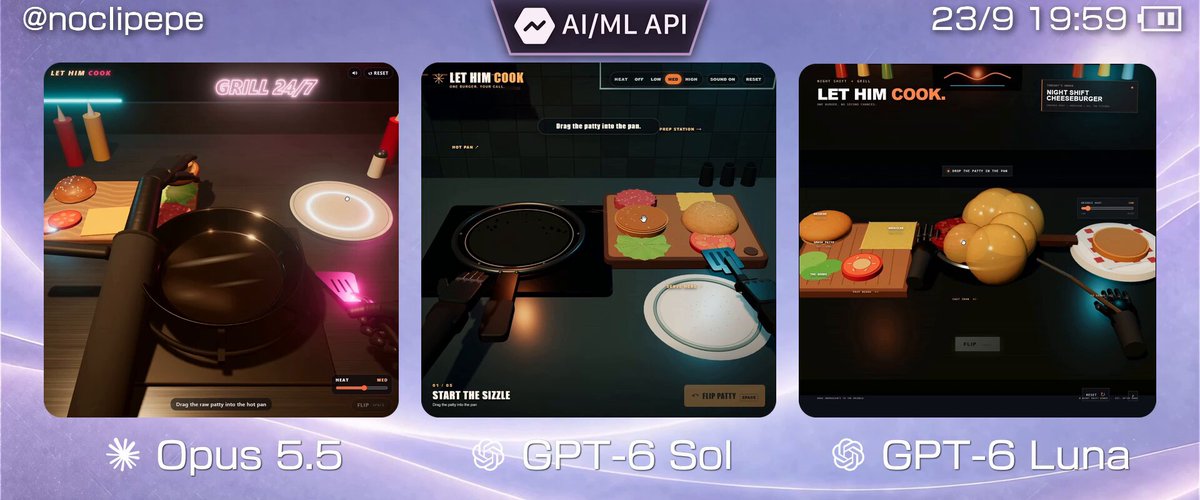
The same prompt is tested with Opus 5.5, GPT-6 Sol and GPT-6 Luna, comparing generation time, cost and the visual result of a first-person burger-making simulator.
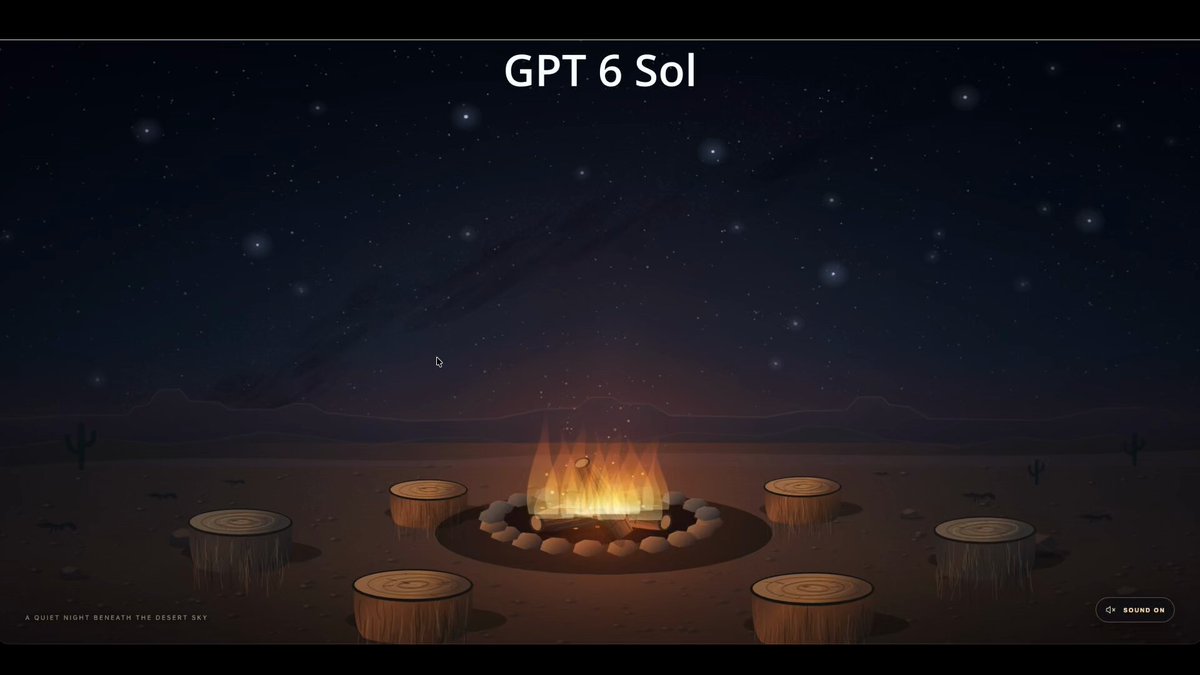
A one-shot test using a simple campfire scene. GPT-6 Sol produced a basic result quickly, while Opus 5.5 took longer but delivered more detailed rendering, a 360-degree camera and spatial audio that changes with the viewing angle.
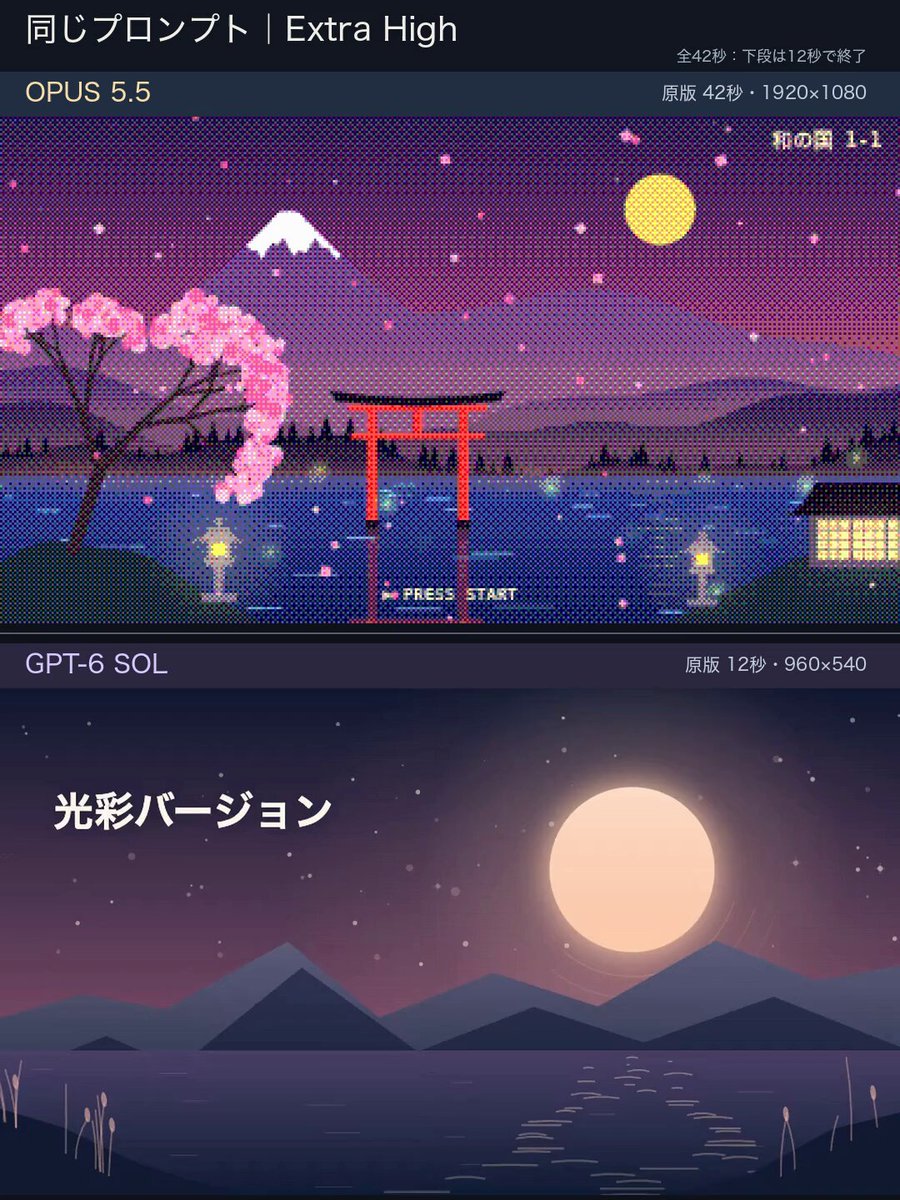
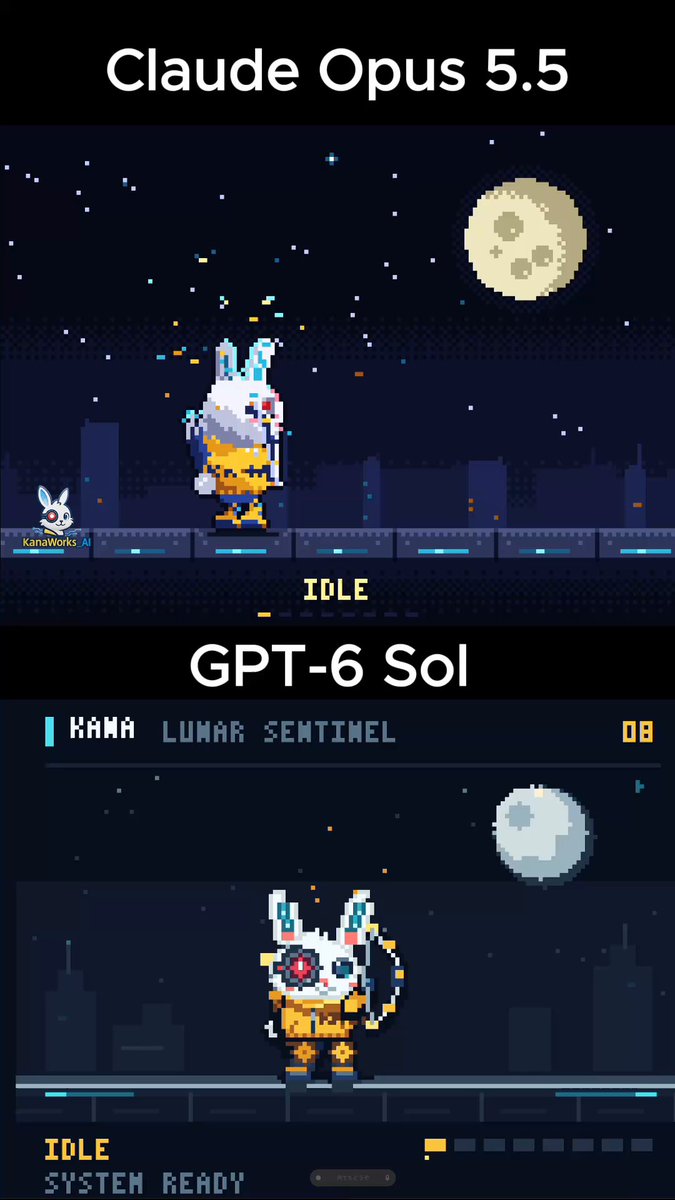
Compare Claude Opus 5.5 and GPT-6 Sol through a code-generated pixel rabbit archer with eight actions, procedural particles and a night scene.
A JavaScript-generated animated short about townspeople asking an AI for help and a girl asking what it likes, with generated frames and music.
Compare Claude Opus 5.5 and GPT-6 Sol through video-like animation with interactive art style switching in pure JavaScript.
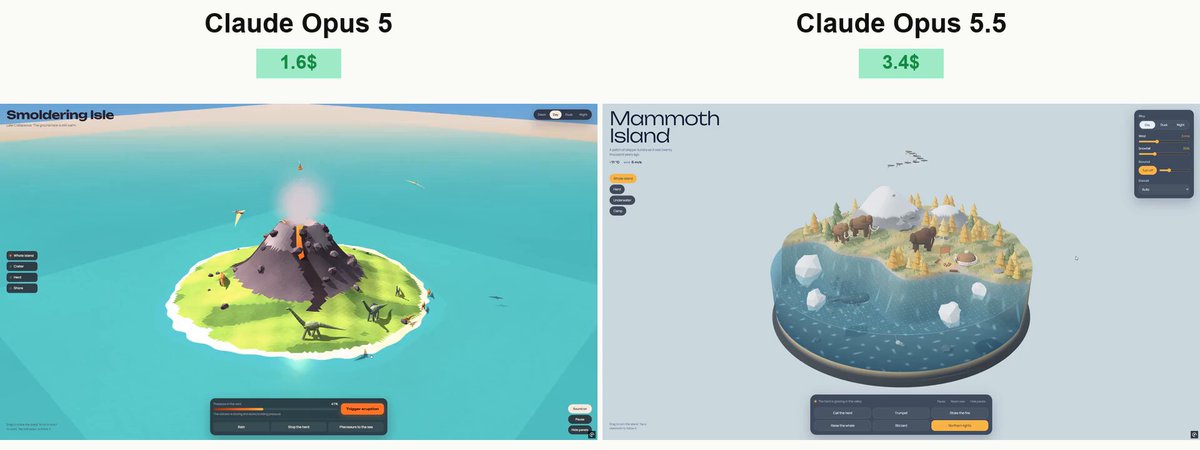
Prompt shared by Vib3Coded in a thread describing their test of Claude Opus 5.5. It requests a standalone Three.js/WebGL interactive prehistoric island with an underwater cross-section, animated dinosaurs and marine life, environmental controls, audio, and browser testing.
A prompt attributed by argofowl to “opus 5.5 extra high” requesting a browser-based Three.js project: a calm, endlessly procedural world to freely roam, with interactive entities, surprises, a defined goal, and a completion chime for playtesting.
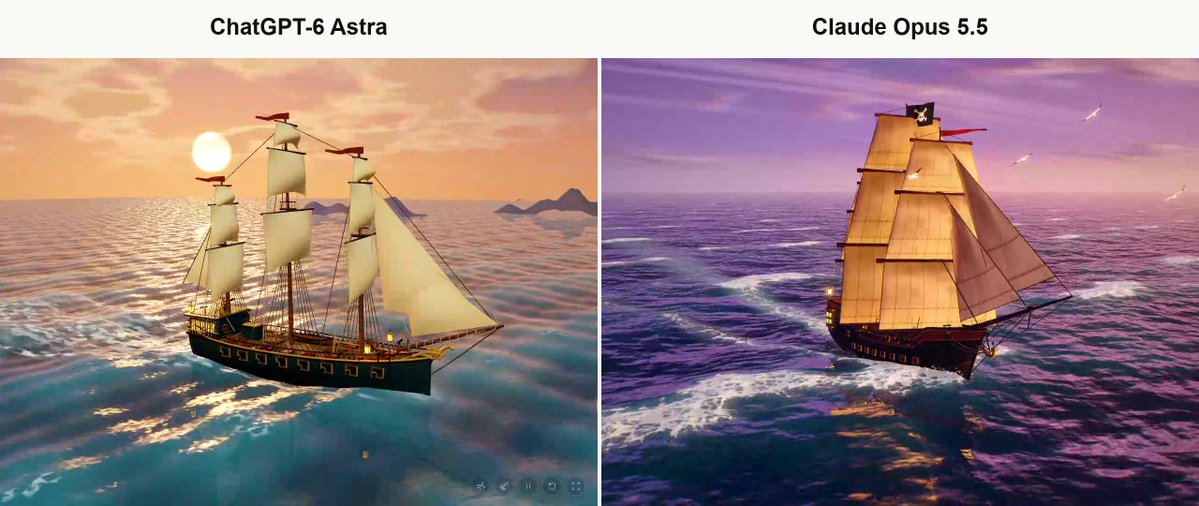
A verified author comment supplies this prompt for the pirate-ship comparison. The root post identifies the right-hand scene as Claude Opus 5.5, and a second verified author comment links to the Claude artifact. The instruction requests a standalone browser page containing a detailed, animated pirate ship sailing through a cinematic stylized sunset ocean.
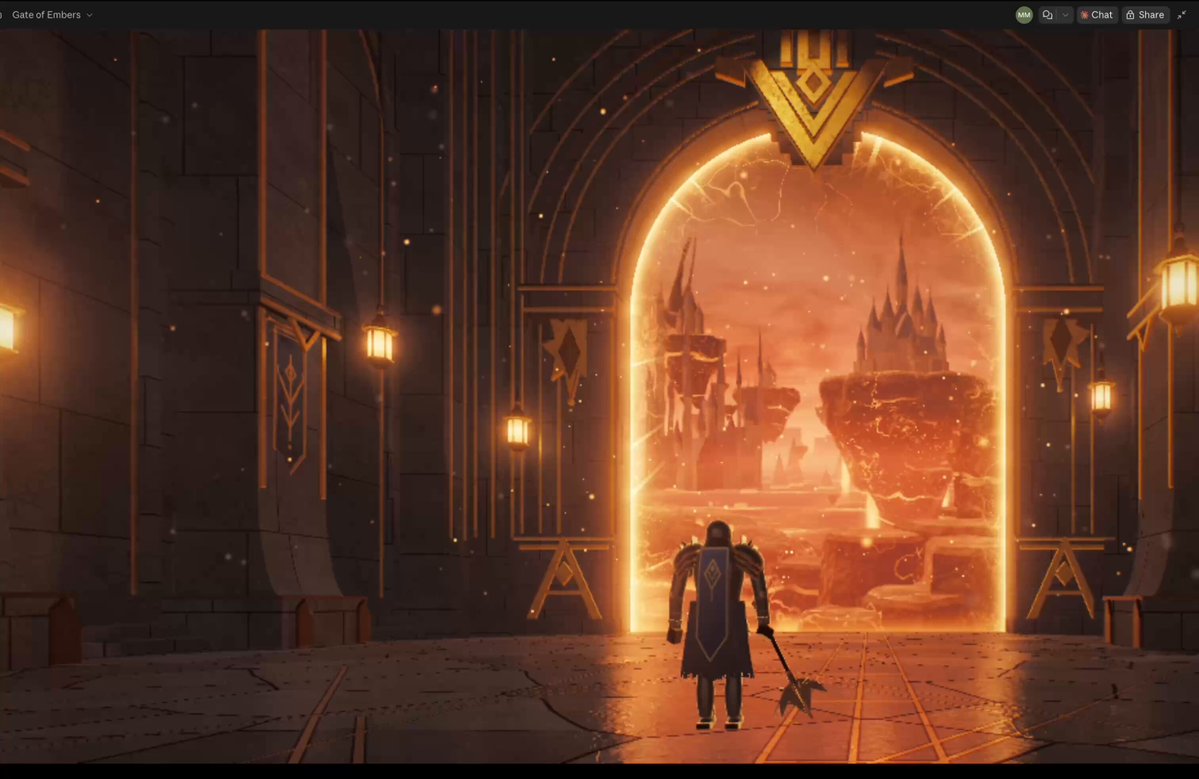
Majid Manzarpour shares a prompt for recreating an uploaded image as a fully procedural, animated Three.js 3D main-menu background in a single HTML file. The root post attributes the test to Opus 5.5.
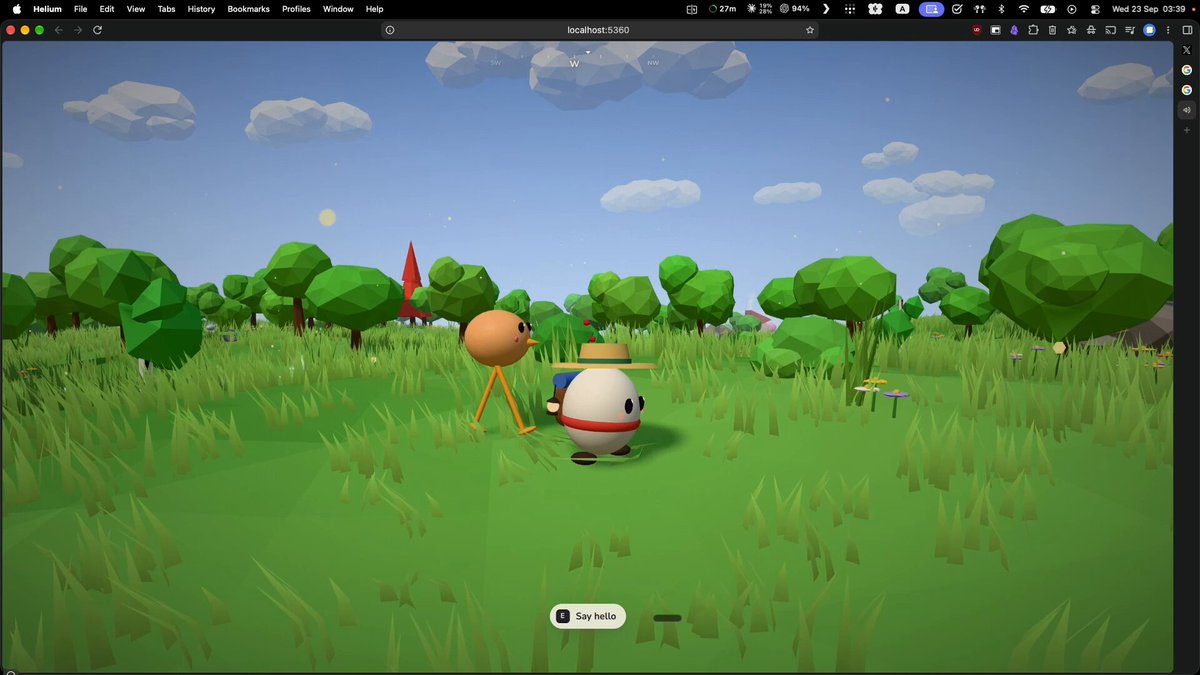
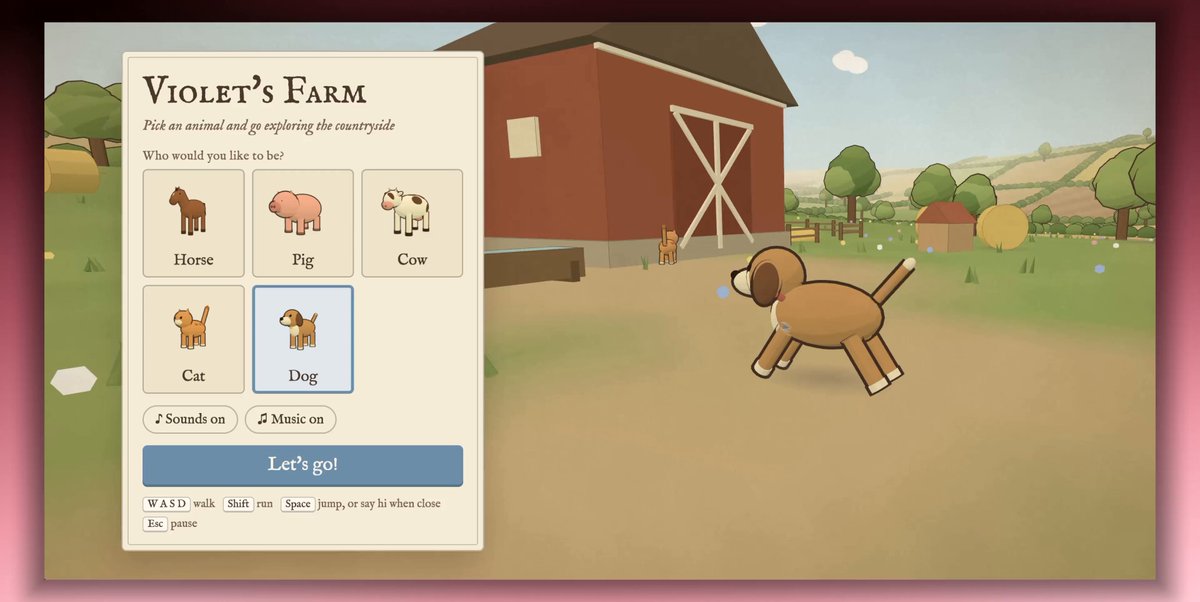
A first-hand Claude Opus 5.5 prompt shared by the author for a lightweight third-person farm animal game. It specifies selectable animals, WASD movement, jumping, proximity-based animal interactions, food and water interactions, a pause/reset menu, and a farmland setting.
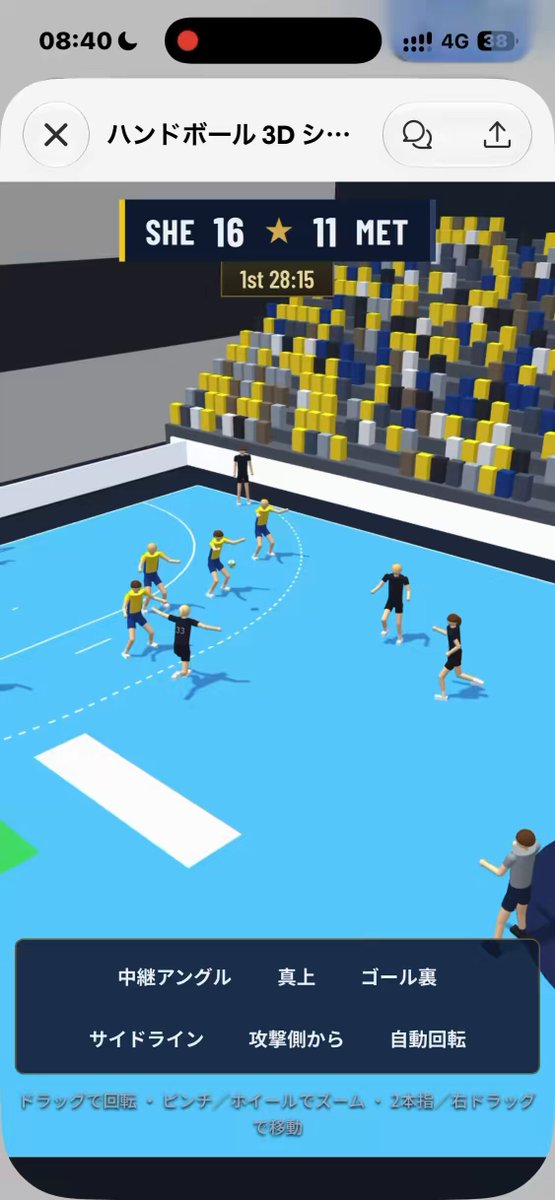
The creator says they modeled the handball scene in a single shot with Claude Opus5.5 and includes the prompt used in this reply. The prompt instructs the model to render the court, goal, referee, players, and ball from the attached image as a 3D scene viewable from any angle, accurately reproducing each person’s pose and the colors of the objects.
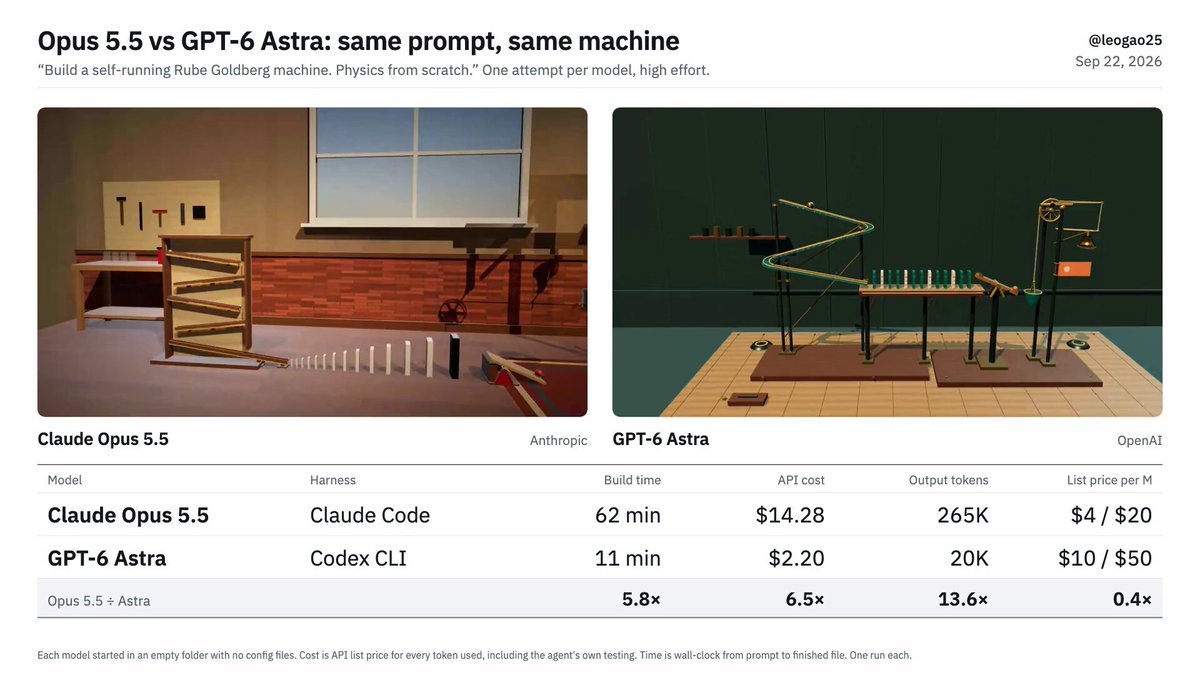
Leo shared this full prompt as the identical one-shot instruction used with Opus 5.5 in Claude Code and GPT-6 Astra in Codex CLI. It requests a self-contained Three.js-rendered Rube Goldberg simulation with custom physics, an automatic cinematic sequence, and deterministic replay.
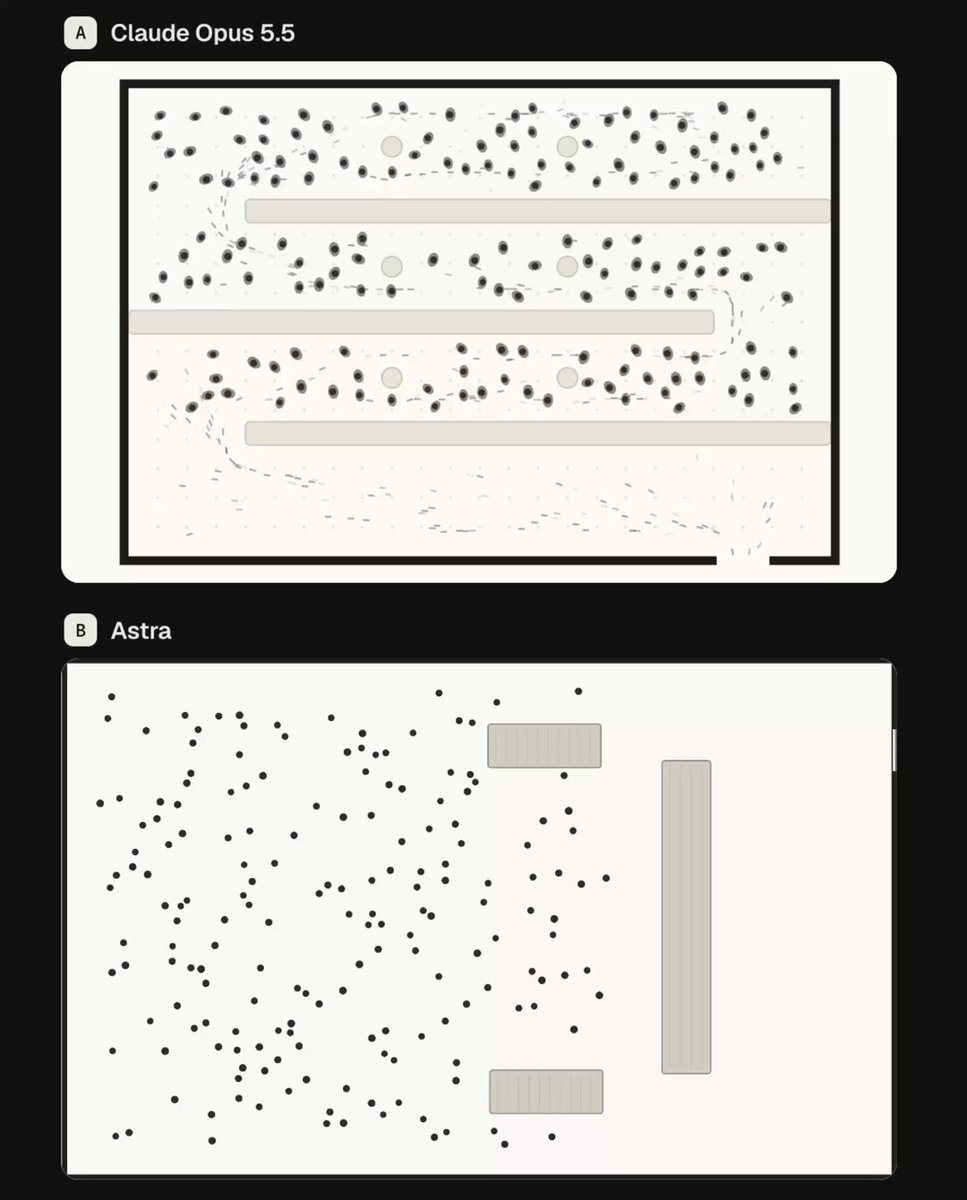
The author says they gave Claude Opus 5.5 and Astra the same prompt to build an interactive crowd evacuation simulation and observe where crowd movement jams.
The author says they used Anthropic Opus 5.5 to model the Hundenberg in Blender and create a realistic video of its accident.
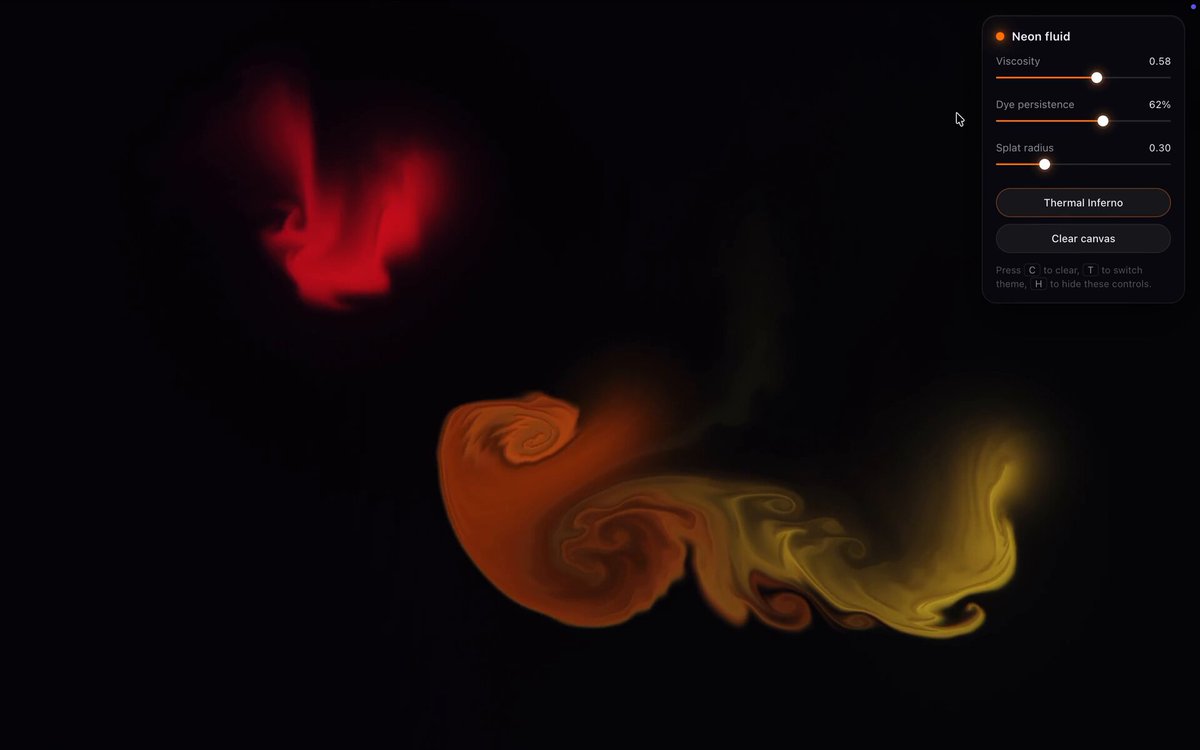
A reusable one-shot prompt shared by the author as the exact prompt used for the displayed GPU neon fluid simulator. The root post explicitly attributes the simulator to Opus 5.5. It requests a dependency-free, single-file WebGL fluid simulation with GPU FBO passes, neon dye interaction, ambient vortices, and a glassmorphism control HUD.