




Make your next creation.
Turn your ideas into 3D assets. Start creating with Hyper3D.
This is New York. An agent built it by itself, with ONE prompt. I didn’t lift a finger. I still can’t process it. A few days ago I came across posts of people modeling in Blender with GPT 5.6 Sol and couldn’t think about anything else. I had to try it with something real. I started with my own house. It came out like garbage: deformed, gray, like a plastic model. I could have stopped there. But I started iterating. I put together some agents that crawl real data about the place from a thousand sources. Footprints, heights, coordinates. With Blender MCP + skills + libraries, they build the model using Blender’s own tools. When the system was ready, I typed a prompt: "armá Nueva York" It returned Manhattan. Real measurements, location nailed to the meter, without me touching a single vertex. What I didn’t expect is that I tested several models and in this GPT 5.6 Sol beats Fable 5 by A LOT. This was only a few days. I’m still iterating on the building detail. If you look at the previous videos on my profile you’ll see how much it improved from one update to the next. Now I’m trying to make it cover more area and detail with a single prompt. (If you know about textures and materials in Blender, I’m listening 🙏) But what’s really blowing my mind isn’t the model. It’s what opens up after. The .blend stays alive. With a couple of phrases you can add a new tower, move an avenue, or fuse entire cities. Buenos Aires on top of New York. The Obelisk standing in the middle of Times Square. I’m not modeling a city. I’m turning reality into a draft that can be edited. Repo + .blend in the first comment 👇 I’ll keep posting every step here. If you like how it progresses, follow me because we’re just getting started. What city do you want me to model next?
Download unavailable. Open the original video to save it.
This is New York. An agent built it by itself, with ONE prompt. I didn’t lift a finger. I still can’t process it. A few days ago I came across posts of people modeling in Blender with GPT 5.6 Sol and couldn’t think about anything else. I had to try it with something real. I started with my own house. It came out like garbage: deformed, gray, like a plastic model. I could have stopped there. But I started iterating. I put together some agents that crawl real data about the place from a thousand sources. Footprints, heights, coordinates. With Blender MCP + skills + libraries, they build the model using Blender’s own tools. When the system was ready, I typed a prompt: "armá Nueva York" It returned Manhattan. Real measurements, location nailed to the meter, without me touching a single vertex. What I didn’t expect is that I tested several models and in this GPT 5.6 Sol beats Fable 5 by A LOT. This was only a few days. I’m still iterating on the building detail. If you look at the previous videos on my profile you’ll see how much it improved from one update to the next. Now I’m trying to make it cover more area and detail with a single prompt. (If you know about textures and materials in Blender, I’m listening 🙏) But what’s really blowing my mind isn’t the model. It’s what opens up after. The .blend stays alive. With a couple of phrases you can add a new tower, move an avenue, or fuse entire cities. Buenos Aires on top of New York. The Obelisk standing in the middle of Times Square. I’m not modeling a city. I’m turning reality into a draft that can be edited. Repo + .blend in the first comment 👇 I’ll keep posting every step here. If you like how it progresses, follow me because we’re just getting started. What city do you want me to model next?
Turn your ideas into 3D assets. Start creating with Hyper3D.
Follow us


State which objects must remain separate, named and editable; otherwise a visually convincing shell may still be unusable.
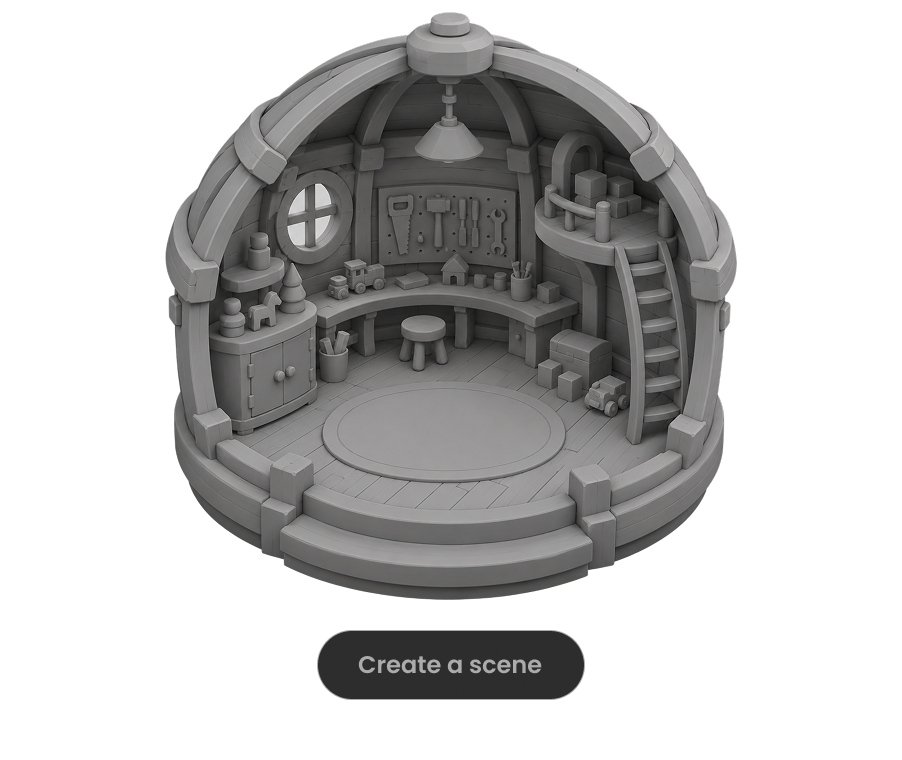
Ask the model to run the scene, inspect visible failures and repeat until concrete frame-rate, interaction and layout checks pass.

For large worlds, split the work into districts, assemblies or milestones and approve each section before expanding scope.

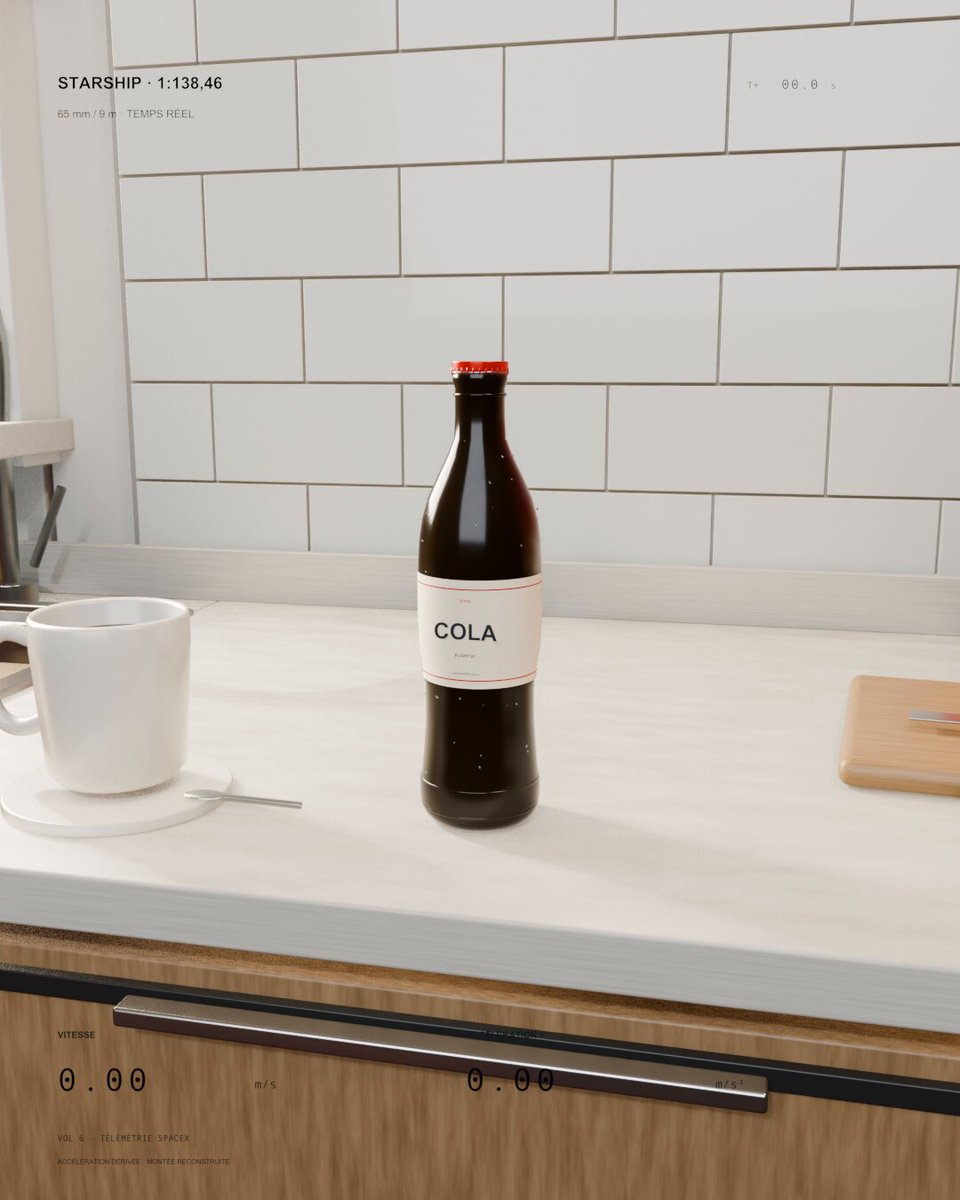
A kitchen soda bottle launches like a miniature Starship. Sol 6.1 was asked to scale real flight speed and acceleration to the bottle and keep everyday objects visible for scale.
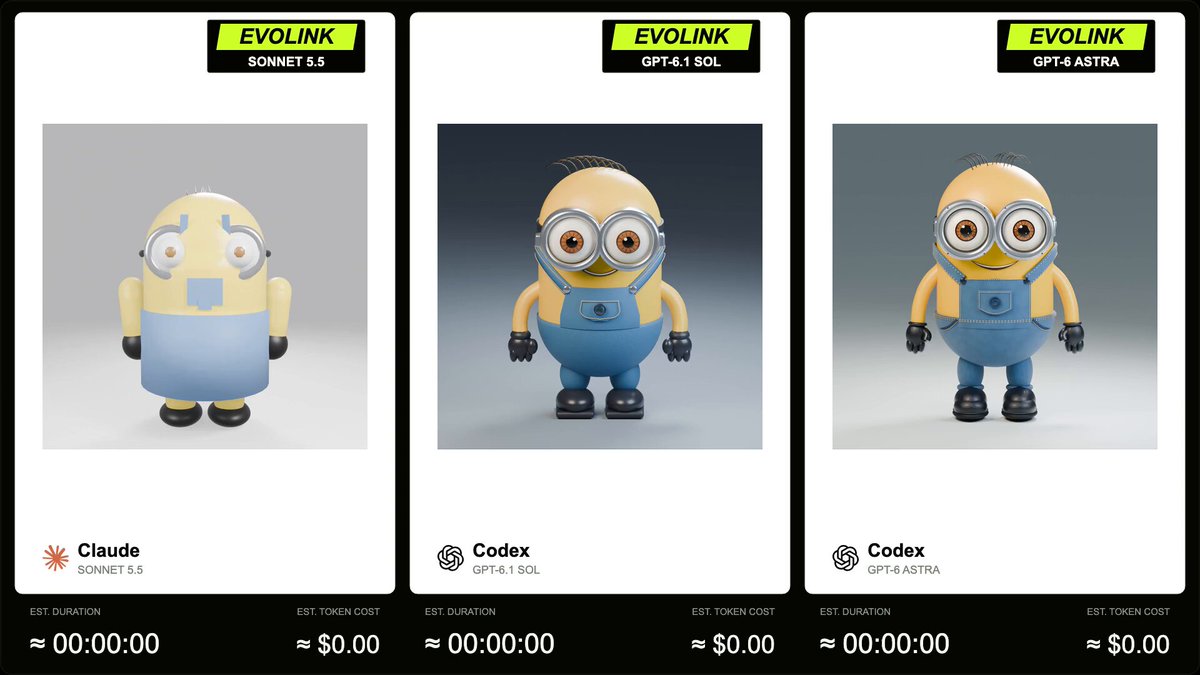
EvoLink compares GPT-6.1 Sol, Sonnet 5.5 and GPT-6 Astra on a Blender Minion model with a 5-second, square, 360-degree turntable animation. The author supplies the full prompt in a reply.
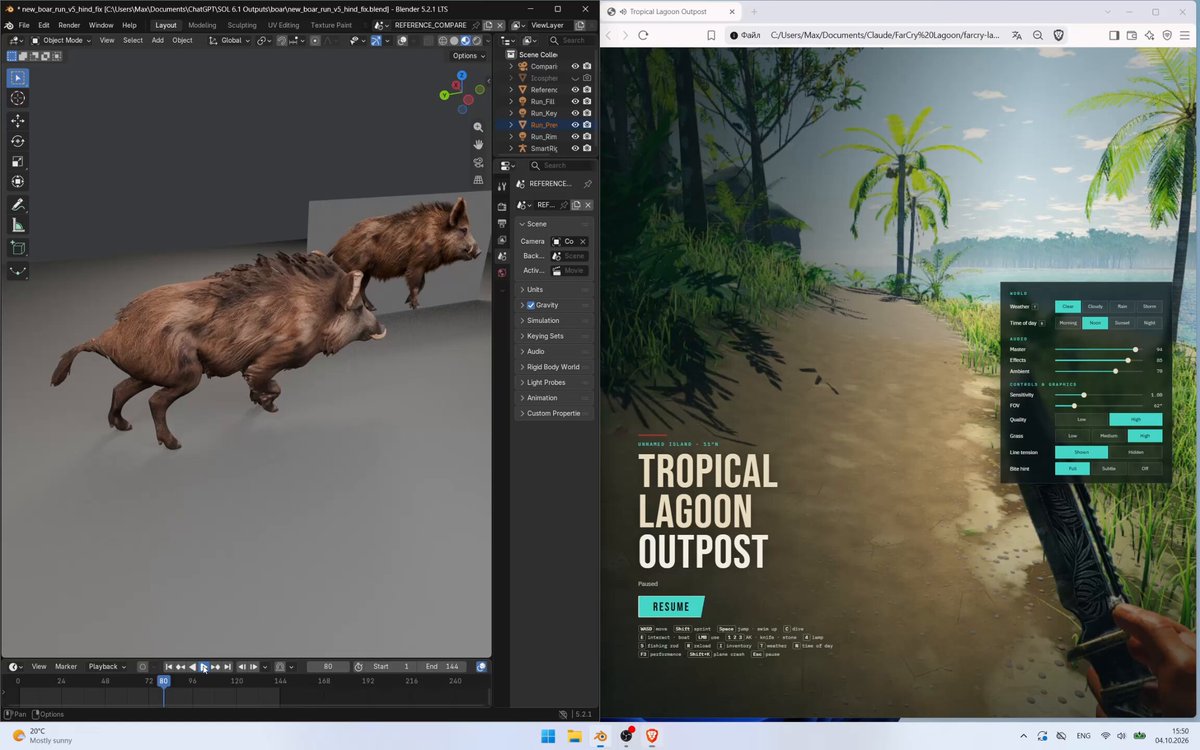
A Meshy-rigged boar is refined in Blender against a synchronized video reference over five iterations. The public prompt specifies a 144-frame, 24 fps comparison and detailed gait and contact checks.
