




Make your next creation.
Turn your ideas into 3D assets. Start creating with Hyper3D.
EvoLink compares GPT-6.1 Sol, Sonnet 5.5 and GPT-6 Astra on a Blender Minion model with a 5-second, square, 360-degree turntable animation. The author supplies the full prompt in a reply.
Download unavailable. Open the original video to save it.
Write a complete, executable Python script using Blender's bpy module to create a 3D Minion character, set up a 360-degree turntable camera animation, and render a 5-second 1:1 video. Animation & Render Specifications: Frame Rate & Duration: Set frame rate to 30 fps and render frame range from frame 1 to 150 (exactly 5 seconds). Aspect Ratio: Set render resolution to 1080x1080 pixels (1:1 square ratio). Camera Turntable Animation:Animate the camera (or an empty controller object parented to the camera) to perform a seamless 360-degree rotation around the Minion over the 150 frames. Set keyframe interpolation to LINEAR to ensure smooth, constant-speed rotation. Output Settings: Set output format to FFmpeg video (H.264 / MP4 container). Technical Requirements & Model Structure: Base Body:Create a capsule-like mesh for the main body (yellow material, subsurface scattering/roughness ~0.3). Add sparse, thin strands of black hair on top of the head. Goggles & EyesBuild dual-lens goggles using extruded cylinders/toruses. Goggle Frame Material: Metallic (~0.9), Roughness (~0.2) to simulate brushed aluminum/metal. Add a black elastic strap wrapping around the body. Generate two eyeball meshes inside the frame (white sclera, brown iris, shiny pupil). Clothing - Overalls:Model the denim overalls using separate mesh geometry or extruded body segments. Material: Blue denim color, higher roughness (~0.6). Include shoulder straps and a front pocket on the chest. Appendages & DetailsAdd arms and legs with black gloved hands and black shoes. Use Mirror Modifier (bpy.ops.object.modifier_add(type='MIRROR')) where applicable (e.g., eyes, goggles frame, arms, straps, legs) to ensure symmetry and clean code. Lighting & Scene:Place a three-point lighting setup (Key, Fill, Rim lights) parented to the camera or placed uniformly so the lighting stays consistent during rotation. Set render engine to Cycles or EEVEE with a clean studio background. Ensure all materials are created using Nodes (use_nodes = True). Return ONLY valid Python code inside a markdown block with no surrounding text or markdown explanations.
Original promptTurn your ideas into 3D assets. Start creating with Hyper3D.
Follow us


State which objects must remain separate, named and editable; otherwise a visually convincing shell may still be unusable.
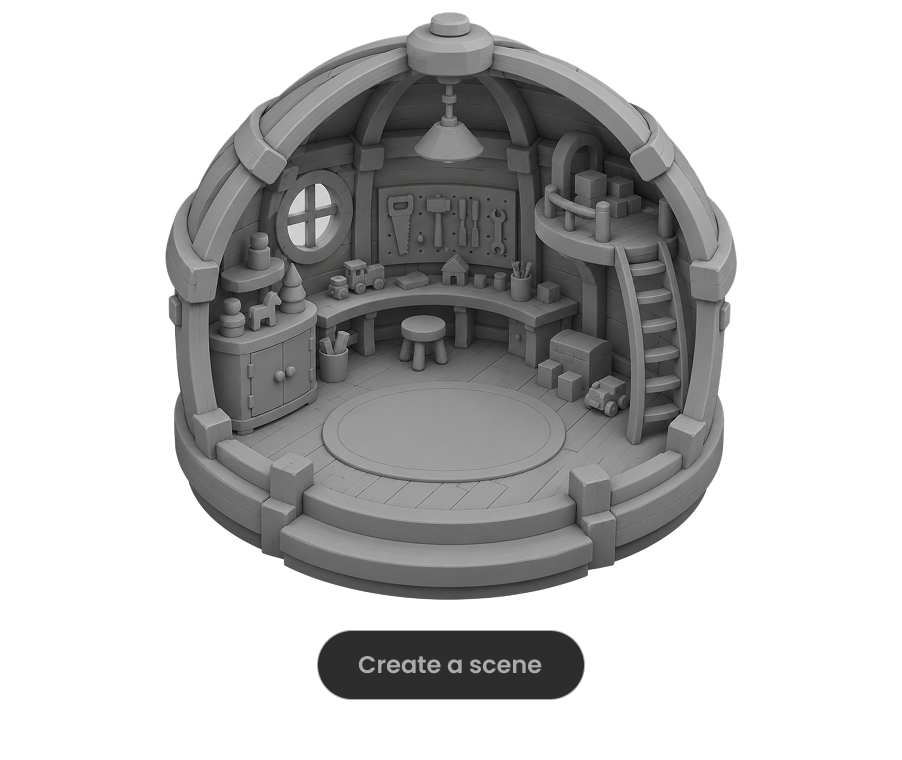
Ask the model to run the scene, inspect visible failures and repeat until concrete frame-rate, interaction and layout checks pass.

For large worlds, split the work into districts, assemblies or milestones and approve each section before expanding scope.

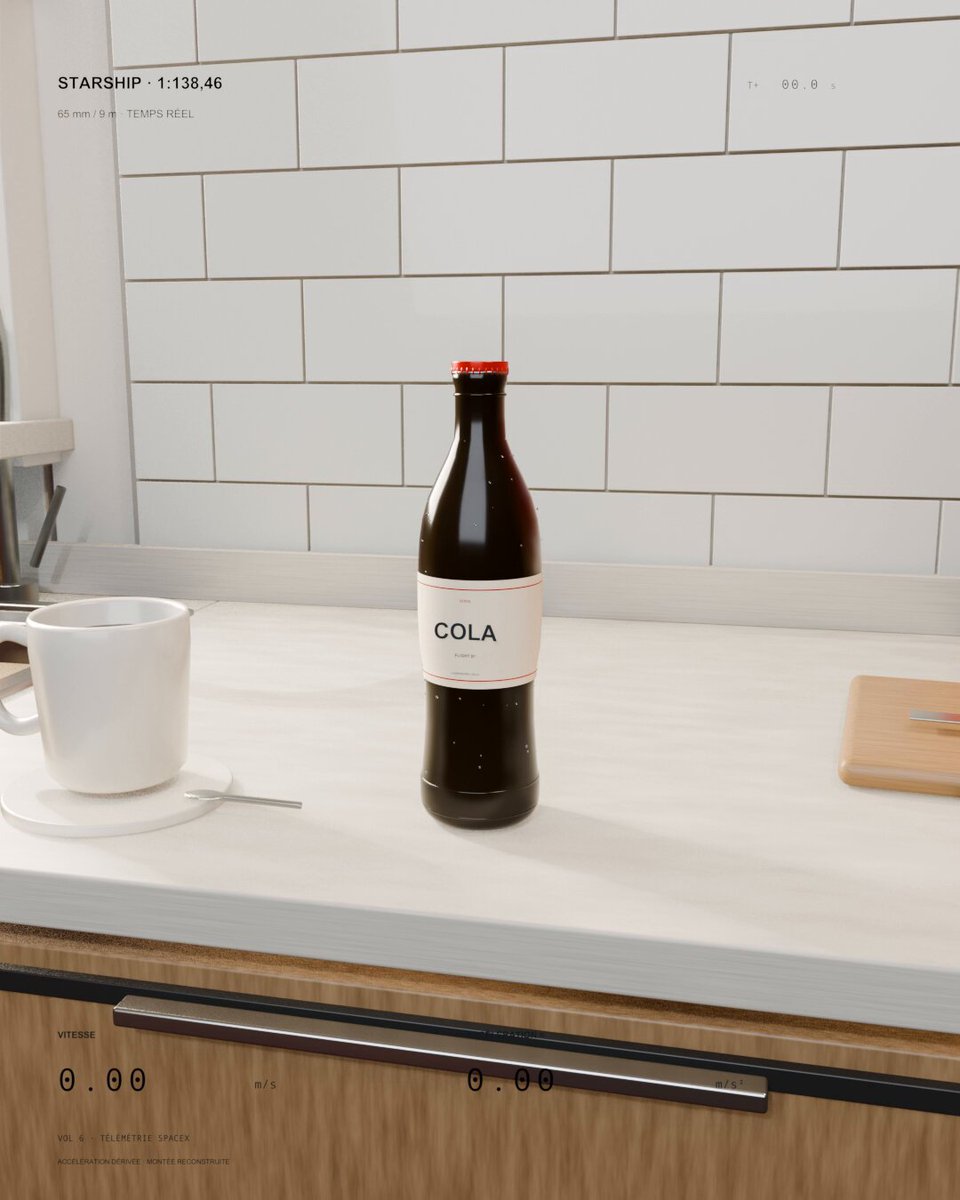
A kitchen soda bottle launches like a miniature Starship. Sol 6.1 was asked to scale real flight speed and acceleration to the bottle and keep everyday objects visible for scale.
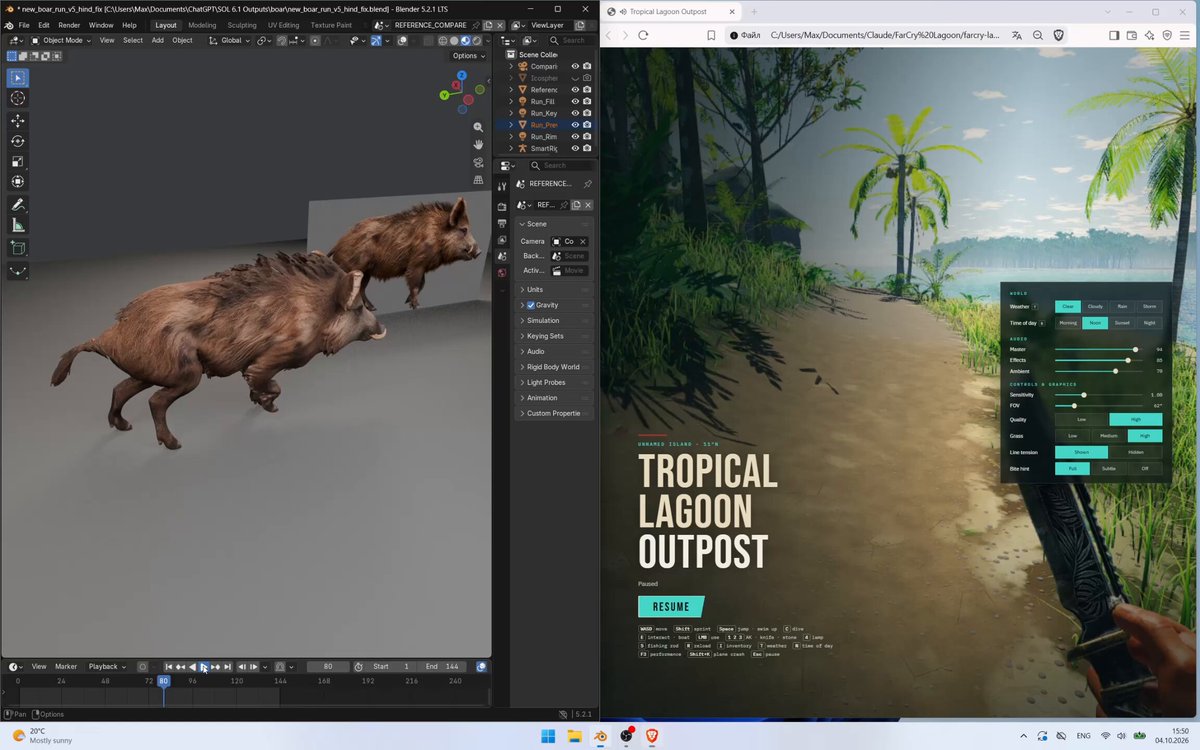
A Meshy-rigged boar is refined in Blender against a synchronized video reference over five iterations. The public prompt specifies a 144-frame, 24 fps comparison and detailed gait and contact checks.
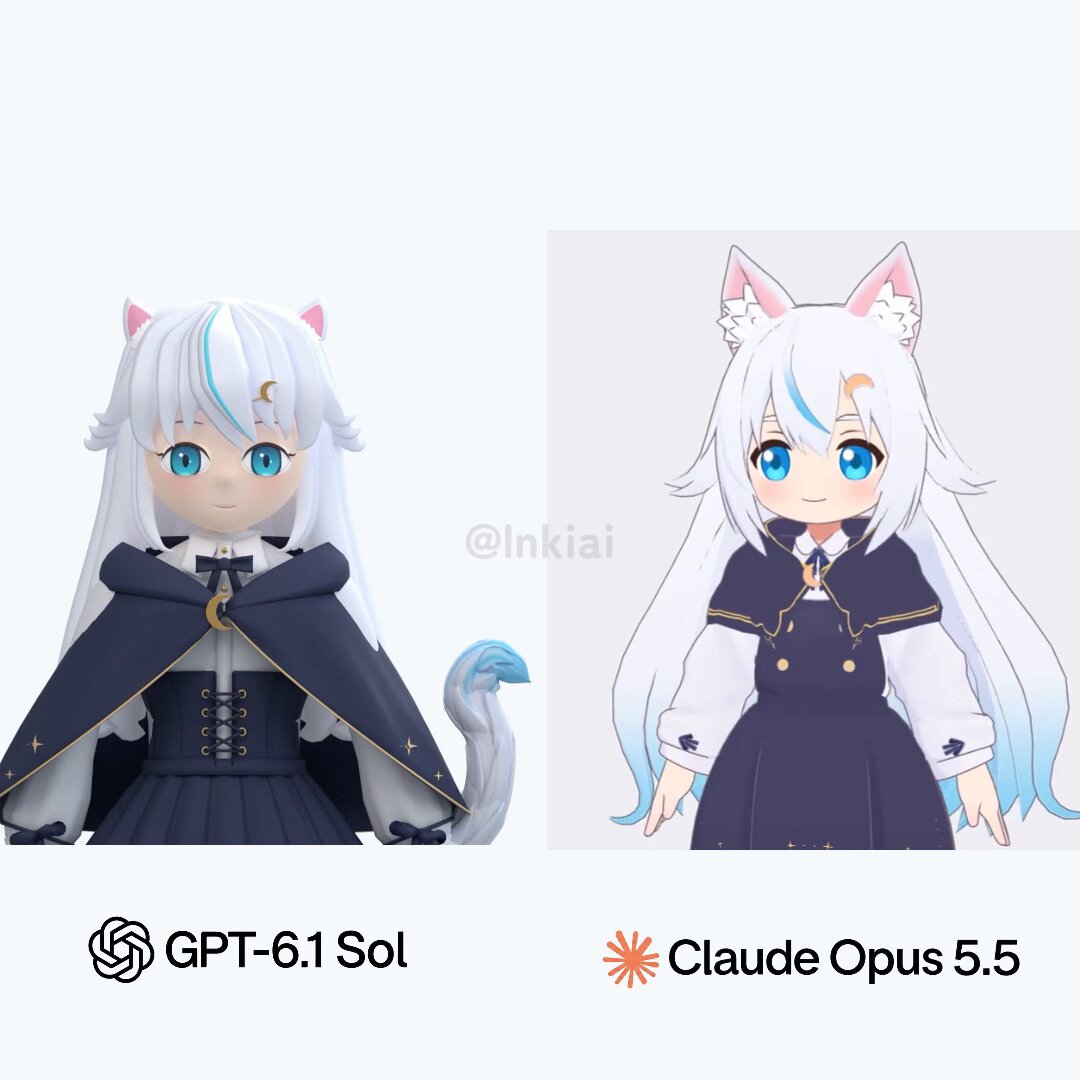
The post compares Codex with GPT-6.1 Sol, which creates a model from scratch in Blender, and Claude Code with Opus 5.5, which proposes combining and modifying existing models and parts.
